
← All sectors / The AI transformation
075 · Wealth & asset management technology
Advice at lower cost to serve
Curve position
Binding constraint
Custodial and compliance integration, which slows every platform migration.
Why this sector sits at Launch Pad
Adoption here is rising steadily rather than inflecting. The binding constraint is trust and workflow integration, and neither has been broken by a specific event. Buyers are running pilots and expanding them at their own pace.
We place this at Launch Pad because nothing dated has changed. There is no regulation with a compliance deadline, no certification, no cost threshold crossed. Gradual improvement is not an inflection, and calling it one would make the position meaningless.
It moves to Liftoff when we can name the event that changed the rate of adoption, not merely observe that adoption grew.
Reviewed on a two month cycle. The position moves only when a dated, verifiable change in the binding constraint justifies it.
A very large transfer of assets between generations is under way at the same time the advisor workforce is retiring. Both trends push the industry toward technology that lowers the cost of serving a client.
Historically wealth management ran on relationships, quarterly statements, and manual portfolio construction. Robo advisors attacked the low end and mostly failed as standalone businesses, but their technology was absorbed by incumbents.
The structural driver is margin pressure meeting scale requirements. Fee compression means an advisor must serve more households to earn the same revenue, which is only possible if the operational work is automated.
The technology layer spans portfolio management and rebalancing, direct indexing and tax loss harvesting at the account level, financial planning software, client portals, and the compliance and surveillance systems regulators require.
Adoption economics are measured in households per advisor. Anything that raises that ratio converts directly into firm profitability, which makes the sale straightforward to a principal who owns the practice.
The beneficiaries include wealth platform and custodial technology vendors, portfolio management software firms, direct indexing providers, compliance and surveillance specialists, and the roll up acquirers consolidating advisory practices.
The value chain runs from custodians through platforms and planning tools to the advisor and client. Custodial integration is the bottleneck that determines which platforms can win.
The overlooked layer includes advisor technology vendors serving independent practices, compliance software firms, alternative investment platforms opening private markets to smaller accounts, and practice management consolidators.
Competitive dynamics favor platforms with custodial relationships and scale, while independents compete on advisor experience and specialized capability.
Risks: revenue tracks asset values and falls in market drawdowns, fee compression is relentless, platform migrations are slow and painful, and regulatory changes can reshape product economics.
What to watch: assets on platform, households per advisor at adopters, direct indexing adoption, and consolidation multiples for advisory practices.
Coverage / Daily Disruptor issues in this sector
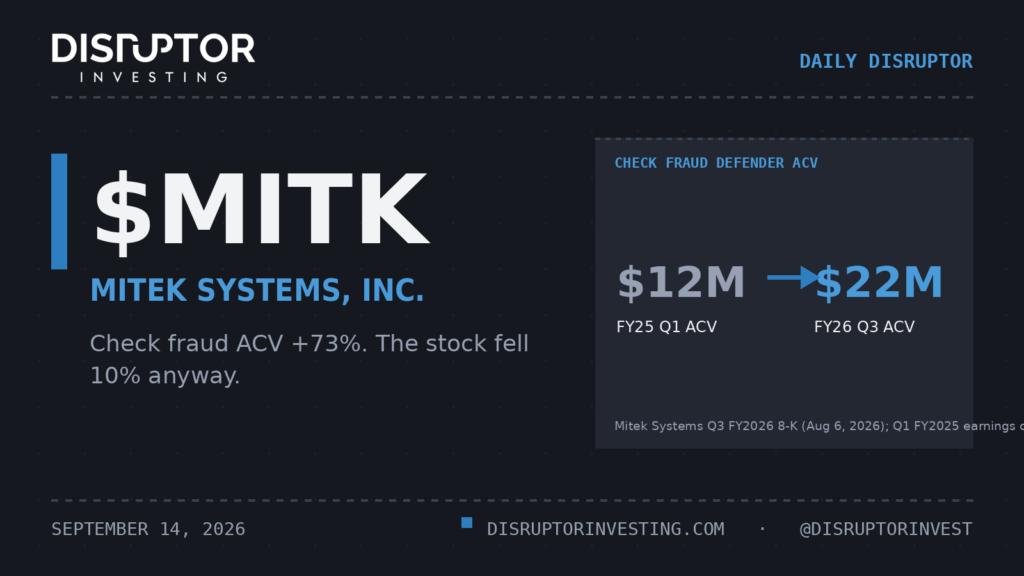
September 14, 2026
Daily Disruptor: $MITK, The Fraud Fighting Network Nobody Is Talking About After Earnings
Mitek's Check Fraud Defender consortium just added Fiserv as a reseller and a top five U.S. bank as a member, covering 70% of U.S. checking accounts,…
Read the issue →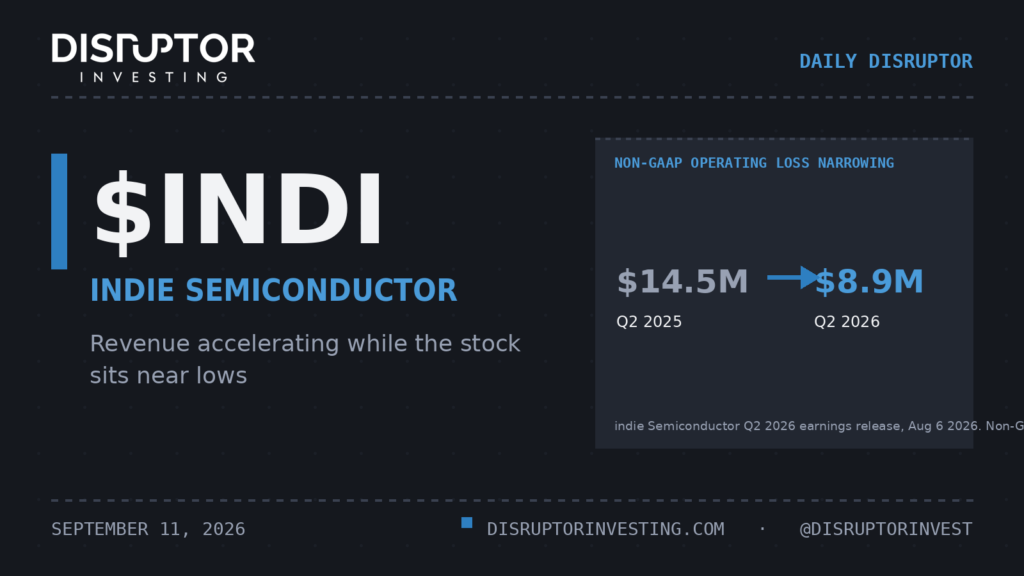
September 11, 2026
Daily Disruptor: $INDI, the ADAS chip maker growing 30% that nobody’s talking about
indie Semiconductor just guided for 30% year over year growth in Q3 while its stock still trades 44% below its 52-week high, a gap that looks…
Read the issue →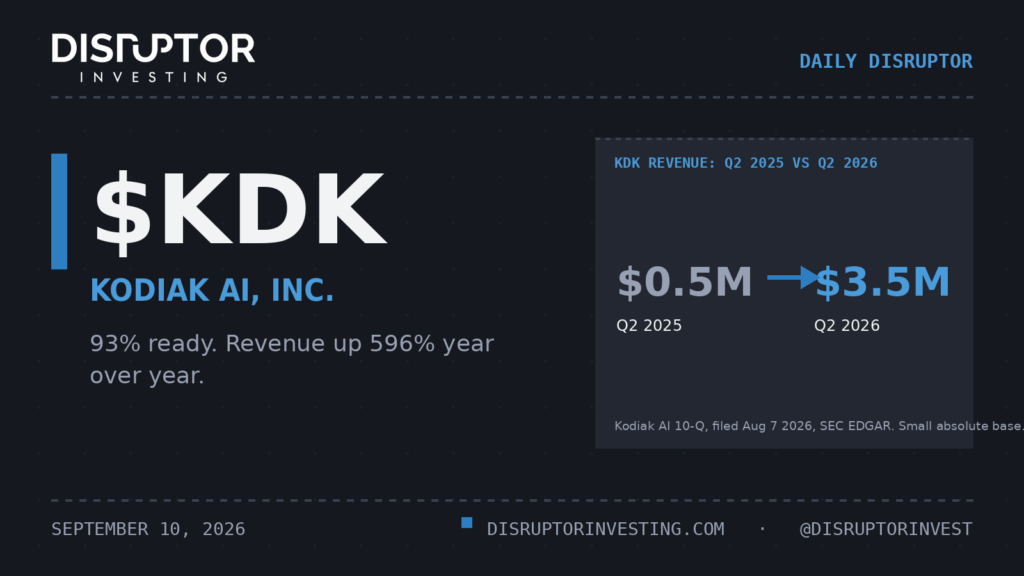
September 10, 2026
Daily Disruptor: $KDK, the driverless long haul launch is ten weeks away
Kodiak AI has 35 driverless semi trucks running commercial freight today, revenue growing at a pace the market has not priced, and a year end highway…
Read the issue →