
← All sectors / The AI transformation
067 · Photonics & optical computing
Moving data with light
Curve position
Binding constraint
Co packaged optics qualification, which reworks how chips and interconnect are assembled.
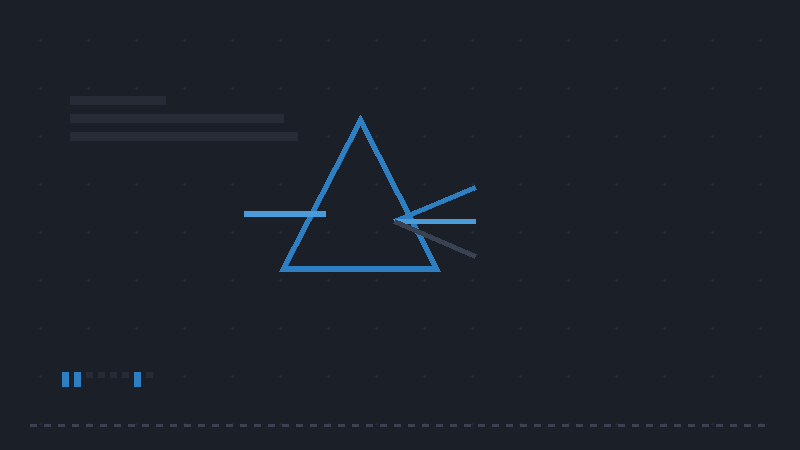
Electrical signaling between chips is hitting physical limits on distance, power, and bandwidth. Optics does not have those limits, which is why light is moving from between buildings to between racks, and eventually onto the chip package.
Historically optics stayed outside the box because transceivers were expensive and fragile. Volume from data center buildouts changed the cost structure, and each accelerator generation makes the electrical alternative less viable.
The structural driver is power. Moving data electrically consumes a growing share of total system power at high bandwidth, and at some point a data center runs out of budget for anything but compute.
The technology layer spans pluggable optical transceivers, linear drive optics that remove power hungry components, co packaged optics that bring light onto the chip substrate, silicon photonics fabrication, and the lasers and connectors underneath.
Adoption economics track accelerator deployment directly. Every high bandwidth cluster requires optics in volume, and specifications are set years ahead in hyperscaler roadmaps, which makes demand unusually visible.
The beneficiaries include optical transceiver manufacturers, laser and photonic component suppliers, silicon photonics foundries, connector and fiber assembly makers, and the test equipment vendors validating each speed transition.
The value chain runs from lasers and photonic integrated circuits through transceiver assembly to system integration. Component makers with qualified parts hold the best positions because qualification is slow.
The overlooked layer includes laser diode manufacturers, optical connector and fiber assembly specialists, photonics packaging and test firms, and the materials suppliers for photonic substrates.
Competitive dynamics are shifting with co packaged optics, which could bypass the pluggable transceiver market entirely and redistribute value toward whoever integrates optics into the package.
Risks: transceiver pricing is competitive and cyclical, technology transitions can strand product lines, the segment is fully levered to data center capital spending, and Asian manufacturers dominate assembly cost.
What to watch: transceiver speed transitions and volumes, co packaged optics qualification milestones, laser supply agreements, and hyperscaler optical roadmaps.
Deep dives / Companies riding this wave

Coverage / Daily Disruptor issues in this sector

August 2, 2026
Daily Disruptor: $LMB, the MEPC contractor that data centers keep calling
Limbach Holdings reports Q2 2026 results after Tuesday's close, and the setup is a beaten down industrial with a 1.5x book to bill ratio, accelerating data…
Read the issue →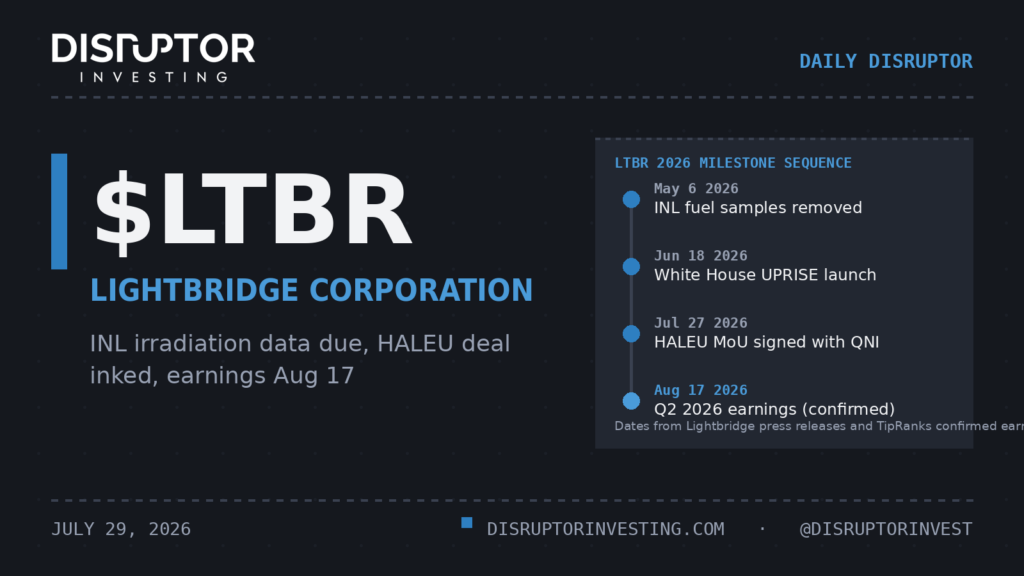
July 29, 2026
Daily Disruptor: $LTBR, Nuclear Fuel Tech at a 52-Week Low Before the Data Lands
Lightbridge has $215.7M in cash, near zero debt, a HALEU supply MoU just signed, and post irradiation examination beginning this fall at Idaho National Laboratory, yet…
Read the issue →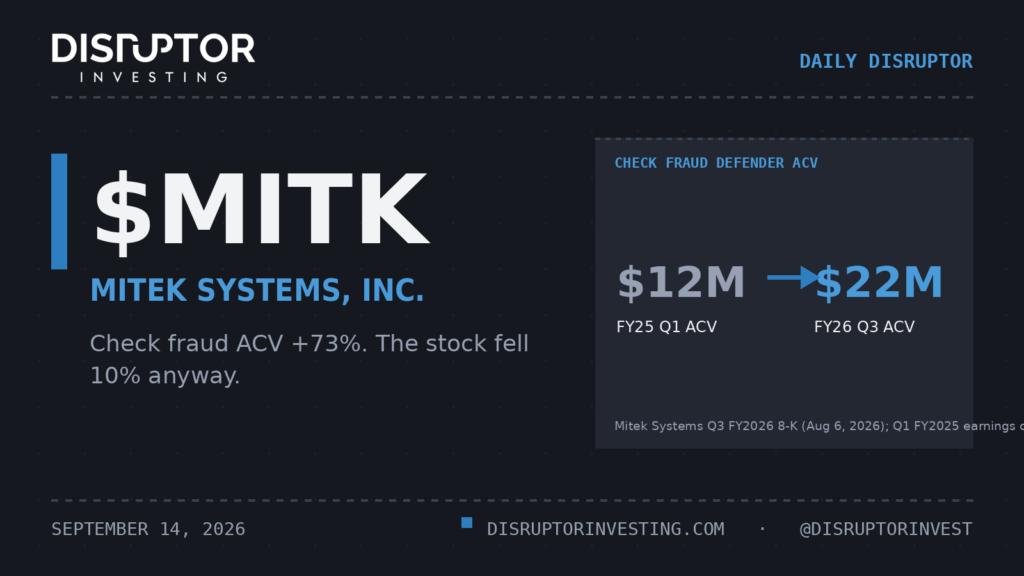
September 14, 2026
Daily Disruptor: $MITK, The Fraud Fighting Network Nobody Is Talking About After Earnings
Mitek's Check Fraud Defender consortium just added Fiserv as a reseller and a top five U.S. bank as a member, covering 70% of U.S. checking accounts,…
Read the issue →