
← All sectors / The AI transformation
065 · Wildfire, flood & disaster resilience
Pricing a more volatile world
Curve position
Binding constraint
Whether utilities and municipalities can recover the spending through rates and budgets.
Why this sector sits at Launch Pad
This is real and early. Commercial deployments exist but are small, and we cannot point to a customer at scale with a figure attached.
We place it at Launch Pad because the binding constraint, whether cost, accuracy, or a missing market mechanism, has not eased in a way we can date. The technology improving is not the same as the constraint breaking.
It moves to Liftoff when a specific event changes the economics, and we would expect to be able to name that event and when it happened.
Reviewed on a two month cycle. The position moves only when a dated, verifiable change in the binding constraint justifies it.

Catastrophe losses have moved from tail risk to recurring expense. Utilities face liability for fires their equipment starts, municipalities face flood exposure, and insurers face both. That has created a permanent market for detection, hardening, and response.
Historically disaster spending was reactive and episodic, appropriated after an event and forgotten between them. Litigation against utilities changed the calculus by attaching direct financial liability to inaction.
The structural driver is liability plus insurance availability. When insurers withdraw from a region, property values and tax bases follow, which forces public spending on resilience whether or not budgets allow.
The technology layer spans satellite and camera based early detection, AI models that predict ignition and spread, grid hardening hardware including covered conductor and fast trip devices, water infrastructure, and the situational awareness platforms used during events.
Adoption economics are driven by avoided liability rather than efficiency. A single avoided wildfire justifies years of detection spending, which makes the business case straightforward once a utility has faced a claim.
The beneficiaries include grid hardening equipment makers, wildfire detection and analytics vendors, engineering firms doing vegetation management and undergrounding, and the emergency communications providers serving public agencies.
The value chain runs from sensing through analytics to physical hardening and response coordination. Physical hardening is where the capital goes, and it flows through regulated utility spending.
The overlooked layer includes vegetation management contractors, covered conductor and hardware suppliers, drone and aerial inspection firms, and the small cap software vendors serving municipal emergency management.
Competitive dynamics are shaped by regulatory approval of utility spending. Where regulators allow cost recovery, programs are large and durable; where they do not, spending stalls regardless of risk.
Risks: public budgets are constrained, utility rate cases are contested, spending is lumpy and event driven, and a few mild seasons can reduce political urgency quickly.
What to watch: utility wildfire mitigation plans and their approved budgets, insurance withdrawal announcements by region, detection technology deployments, and undergrounding program spending.
Coverage / Daily Disruptor issues in this sector

September 4, 2026
Daily Disruptor: $STDN, America’s only TRISO fuel maker just delivered its first reactor core
Standard Nuclear delivered the first commercially produced TRISO fuel reactor core in US history last quarter, its backlog has grown six fold in six months, and…
Read the issue →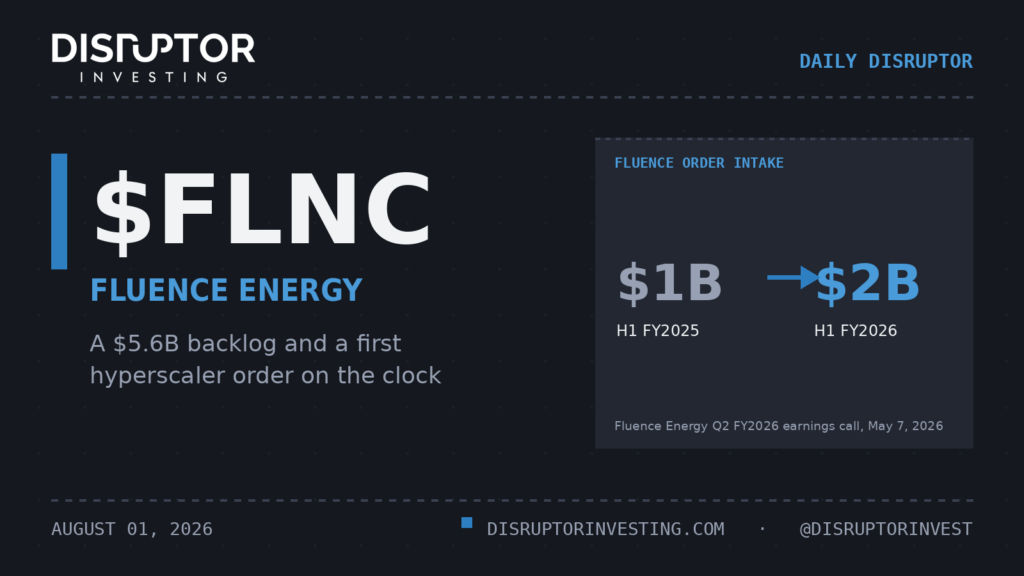
August 1, 2026
Daily Disruptor: $FLNC, the grid storage name with a hyperscaler order due in days
Fluence Energy reports Q3 results on August 5, and the call on August 6 should reveal whether the first purchase order from one of two hyperscaler…
Read the issue →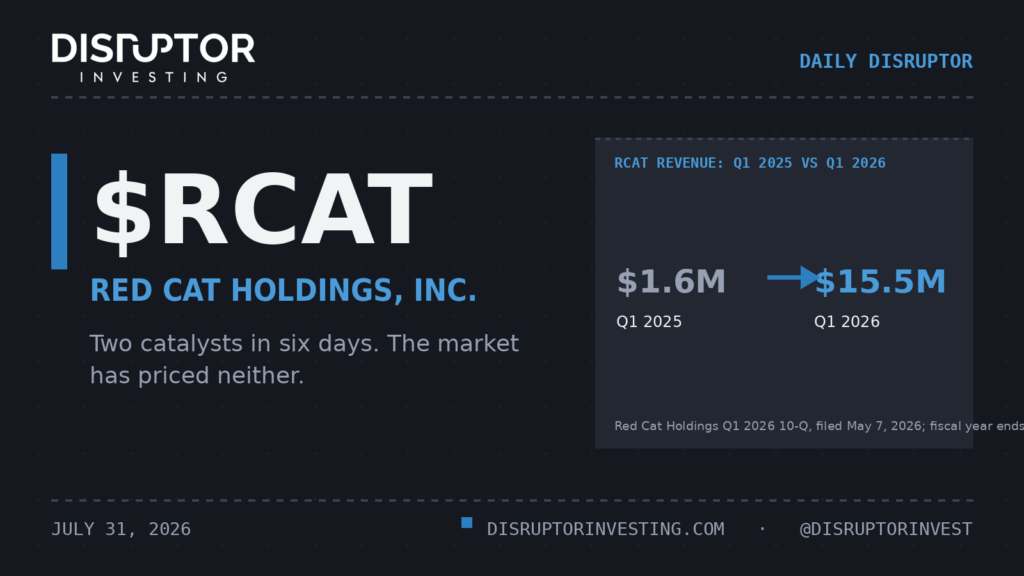
July 30, 2026
Daily Disruptor: $RCAT, The Army’s Drone Supplier Faces Its Most Important Week
Red Cat enters a six day window containing its Q2 earnings print and the Gauntlet II Drone Dominance competition at Fort Carson, while the stock sits…
Read the issue →