
← All sectors / The AI transformation
062 · Transmission & grid hardware
The wires nobody built
Curve position
Binding constraint
Permitting and right of way, which no amount of capital shortens.
You can build a solar farm in a year and a gas plant in three. Connecting either to demand takes a decade, because transmission requires permits, land rights, and equipment that is sold out years forward.
Historically transmission was a slow, regulated, unglamorous business that grew with population. Load growth from data centers and electrification broke that pattern, and the industry is now the acknowledged bottleneck in the energy transition.
The structural driver is arithmetic. Interconnection queues in major markets hold more capacity than currently exists on the grid, and most of that queue is waiting on wires rather than generation.
The technology layer spans high voltage transformers, switchgear, circuit breakers, conductor and cable, high voltage direct current systems for long distance transfer, grid enhancing technologies that raise the capacity of existing lines, and the software that manages it all.
Adoption economics are unusually clean for investors. Regulated utilities earn a return on approved capital, so grid spending converts directly into rate base and earnings growth, with regulators broadly supportive of reliability investment.
The beneficiaries include transformer and switchgear manufacturers with multi year backlogs, cable and conductor producers, engineering and construction firms that string line, and the utilities whose capital plans are expanding.
The value chain runs from raw materials through equipment manufacture to engineering, construction, and utility ownership. Equipment is the tightest link, with lead times measured in years and pricing power to match.
The overlooked layer includes smaller transformer and component manufacturers, grid enhancing technology vendors that add capacity without new lines, utility engineering services firms, and the specialty steel and copper suppliers underneath.
Competitive dynamics favor incumbents with manufacturing capacity, because building a transformer plant takes years and qualified welders are scarce. New entrants cannot simply appear in response to price.
Risks: permitting reform can stall in legislatures, utility capital plans are subject to regulatory approval, commodity costs for copper and steel swing project economics, and a slowdown in load growth would deflate the whole thesis.
What to watch: transformer lead times, interconnection queue reform, utility capital plan revisions, transmission project approvals, and backlog disclosures at equipment makers.
Deep dives / Companies riding this wave

August 25, 2026
$NPKI: The Mat Company Wiring America’s Grid
NPK International rents temporary access matting to utility crews building high voltage transmission lines, and its margins just did something unexpected: they expanded 400 basis points…
Read the deep dive →
August 13, 2026
$BWEN: The Gear Grinder Powering AI’s Gas Turbine Boom
Broadwind just reported 67% revenue growth from continuing operations while most analysts are still modeling a wind tower company that no longer exists. The re rating…
Read the deep dive →Coverage / Daily Disruptor issues in this sector
August 21, 2026
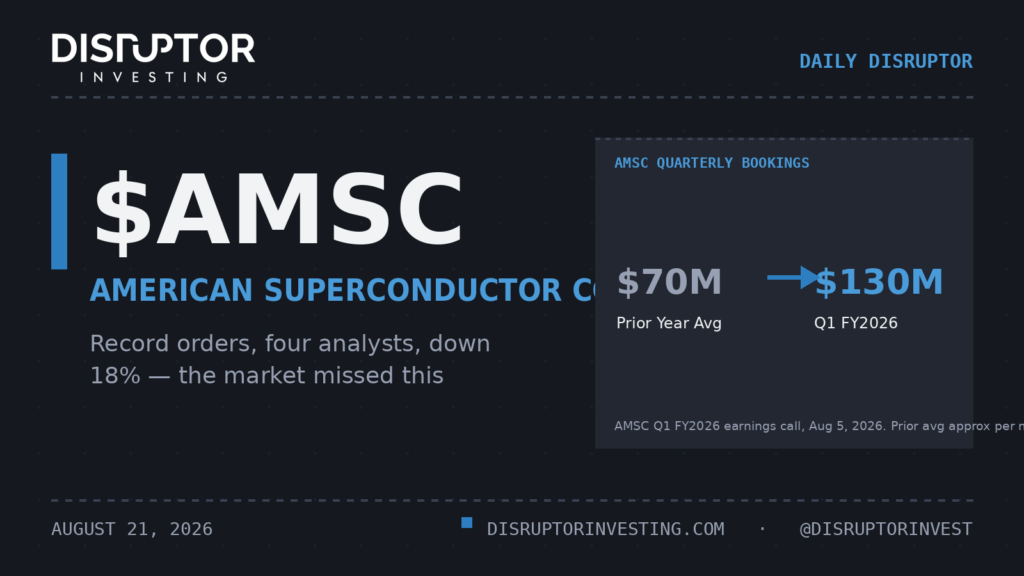
Daily Disruptor: $AMSC, Grid Hardware Nobody Is Watching
AMSC booked over $130 million in new grid orders in a single quarter while the stock traded near a twelve month low with only four analysts…
Read the issue →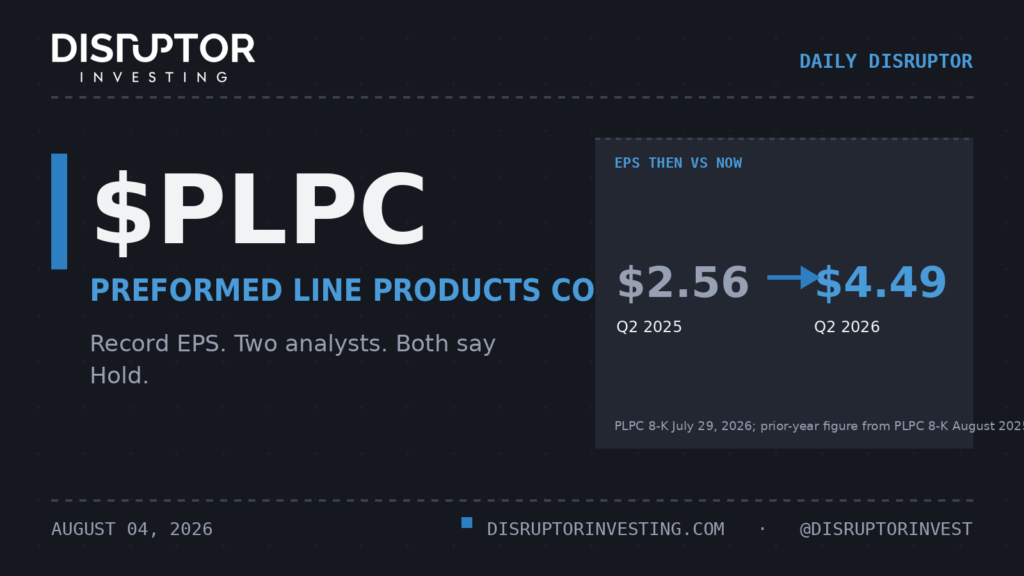
August 4, 2026
Daily Disruptor: $PLPC, the Grid Hardware Name Two Analysts Still Have at Hold
Preformed Line Products just printed the highest quarterly EPS in its 79-year history and the only two analysts covering it still rate the stock Hold at…
Read the issue →