
← All sectors / The AI transformation
029 · Identity, trust & authentication
Proving who's real
Curve position
Binding constraint
Standards for provenance and agent authorization are unsettled.

Generative AI broke a working assumption of the internet: that a face, a voice, or a document is evidence of who produced it. Rebuilding that trust layer is now infrastructure work, and it touches banking, hiring, government services, and every transaction that depended on recognition.
Historical context: identity verification grew up around anti money laundering rules and account opening, using documents and selfies as proof. Both are now cheaply forgeable at scale, which invalidates a decade of deployed methods almost simultaneously.
The structural driver is fraud economics. Voice cloning and video deepfakes have already produced large corporate losses, and the attack cost keeps falling. Every organization that authenticates a human: remotely, at volume. Has to upgrade or absorb the losses.
The technology layer spans liveness detection and biometric matching hardened against synthesis, document forensics, device and behavioral signals, cryptographic credentials and content provenance standards, and the authorization systems that decide what AI agents are permitted to do on a person's behalf.
Adoption economics are loss driven and therefore fast: fraud reduction is measurable within a quarter, and regulatory penalties for failed verification are immediate. This is a purchase made by risk officers, not innovation committees.
The beneficiaries include identity verification vendors, biometric hardware and software providers, fraud detection platforms, credential and provenance infrastructure companies, and the workforce screening firms verifying candidates in an era of synthetic applicants.
The value chain runs from capture devices through verification services to the systems relying on them. Value accrues to vendors with proprietary fraud signal networks, every attack they observe improves detection for every customer, a compounding advantage.
The overlooked layer includes small cap biometric and document verification specialists, background screening providers adapting to synthetic credentials, provenance and watermarking startups, and the government focused identity vendors on multi year contract vehicles.
Competitive dynamics reward network effects in fraud data and punish point solutions, since buyers prefer consolidated risk platforms. Standards bodies and regulators will pick winners here more than in most software categories.
Risks: biometric data collection faces privacy regulation and public resistance; false positive rates create customer friction that buyers weigh heavily; the arms race means today's detection can be obsolete in months; and platform vendors may bundle verification into broader security suites.
What to watch: deepfake fraud loss disclosures, regulatory mandates for identity assurance, adoption of content provenance standards, and agent authorization frameworks as AI assistants begin transacting. The research treats verification as the trust layer the AI era has to rebuild.
Coverage / Daily Disruptor issues in this sector
September 11, 2026
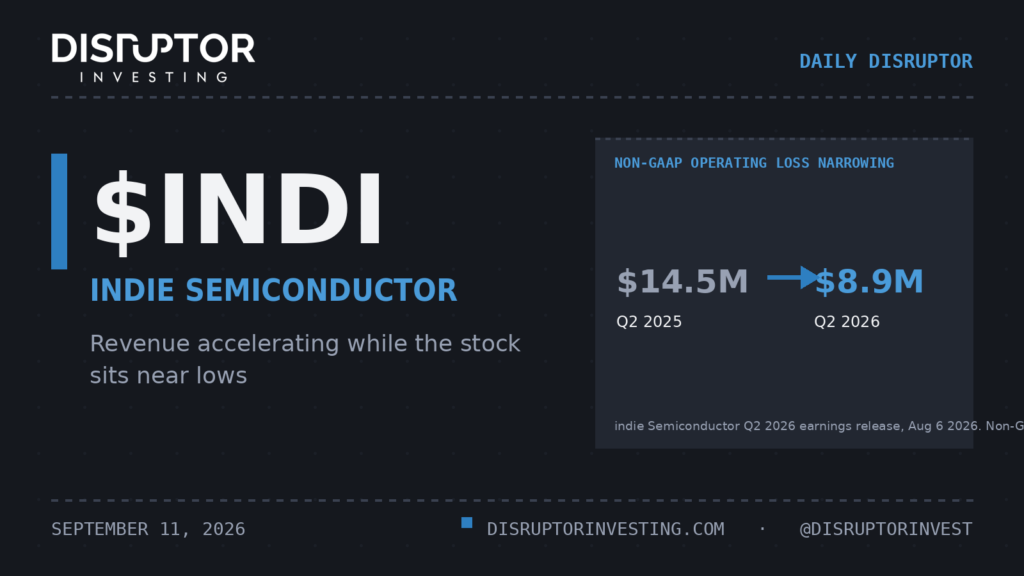
Daily Disruptor: $INDI, the ADAS chip maker growing 30% that nobody’s talking about
indie Semiconductor just guided for 30% year over year growth in Q3 while its stock still trades 44% below its 52-week high, a gap that looks…
Read the issue →
August 12, 2026
Daily Disruptor: $AMRC, the energy infrastructure company data centers just discovered
Ameresco just reported a record $1.8 billion quarter of new project awards, two thirds of it from data center customers who can't wait for grid connections.
Read the issue →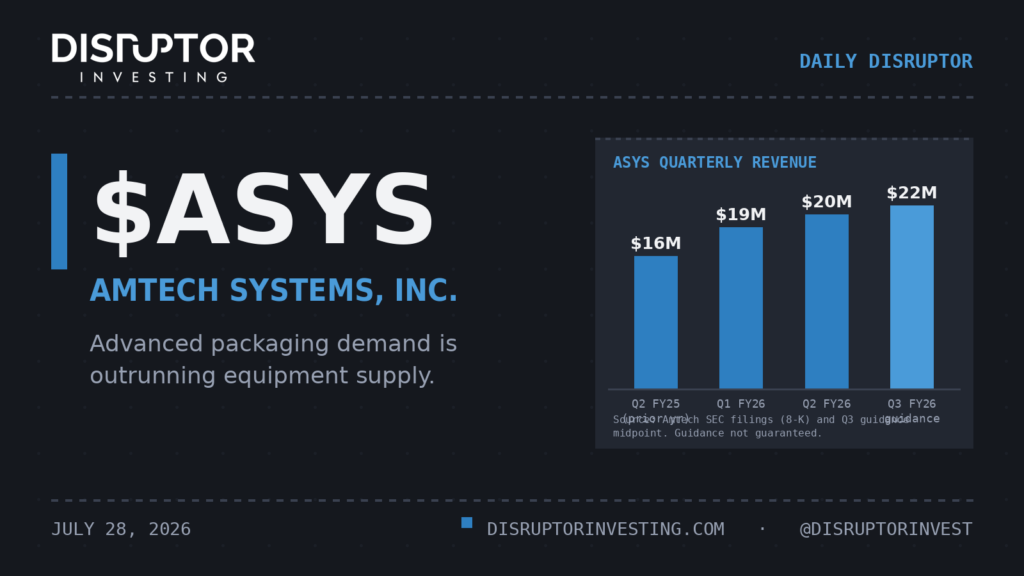
July 28, 2026
Daily Disruptor: $ASYS, The Tiny Furnace Maker Riding the AI Packaging Wave
Amtech Systems is a micro cap that makes thermal processing equipment for AI semiconductor packaging, and it has two hard dated catalysts in the next five…
Read the issue →