
← All sectors / The AI transformation
101 · Cloud cost & infrastructure optimisation
The bill nobody could explain
Curve position
Binding constraint
Engineering attention, which is the scarcest input in any optimisation effort.
Cloud spending became the second largest expense at many technology companies, and AI workloads made it grow faster than revenue at some. Most organisations cannot attribute that bill to products, teams, or customers with any precision.
Historically infrastructure was capital expenditure, planned annually and visible. Cloud turned it into an operating expense that any engineer could increase at three in the morning without approval.
The structural driver is accelerator cost. GPU hours are expensive enough that inefficiency shows up in gross margin, which brings finance into a conversation that used to be purely engineering.
The technology layer spans cost attribution and tagging, rightsizing and autoscaling, commitment and reservation management, workload scheduling across regions and providers, and the observability that connects spending to performance.
Adoption economics are immediate and measurable. A tool that reduces spend by fifteen percent pays for itself many times over, which makes the sale unusually easy compared with most enterprise software.
The beneficiaries include cloud cost management vendors, observability platforms extending into cost, infrastructure automation firms, and the consultancies doing optimisation engagements.
The value chain runs from cloud providers through management tooling to engineering and finance teams. Tooling that sits in the deployment path can act rather than only report, which is the stronger position.
The overlooked layer includes commitment marketplace operators, GPU scheduling specialists, storage tiering tools, and the data transfer optimisation vendors addressing egress costs.
Competitive dynamics face a structural problem: cloud providers offer their own cost tools free, and have limited incentive to make them excellent. Independents compete on multi cloud coverage and on being trusted to reduce the bill.
Risks: hyperscalers can bundle the category away, savings are one time in each account which pressures renewals, and a cloud spending slowdown reduces the pool being optimised.
What to watch: disclosed cloud gross margin at software companies, GPU utilisation rates, commitment purchase behaviour, and hyperscaler native tooling announcements.
Coverage / Daily Disruptor issues in this sector
August 21, 2026
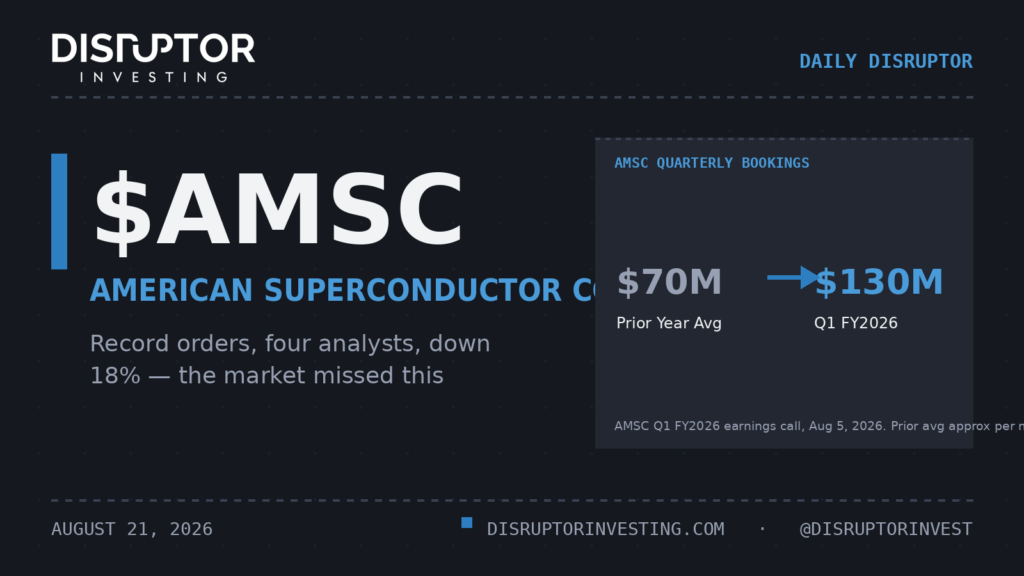
Daily Disruptor: $AMSC, Grid Hardware Nobody Is Watching
AMSC booked over $130 million in new grid orders in a single quarter while the stock traded near a twelve month low with only four analysts…
Read the issue →
August 20, 2026
Daily Disruptor: $NNE, the microreactor nobody is paying for
NANO Nuclear just entered formal NRC licensing for its KRONOS microreactor, acquired a profitable nuclear logistics company, and signed a domestic HALEU fuel MOU two days…
Read the issue →
August 18, 2026
Daily Disruptor: $MYRG, The Grid Builder Nobody Is Talking About
MYR Group just posted its best quarter ever, beat EPS estimates by 20%, and the stock is still 35% below its June high.
Read the issue →