
← All sectors / The AI transformation
094 · Warehouse automation & fulfilment robotics
The building that moves itself
Curve position
Binding constraint
Retrofit complexity in buildings never designed for machines.
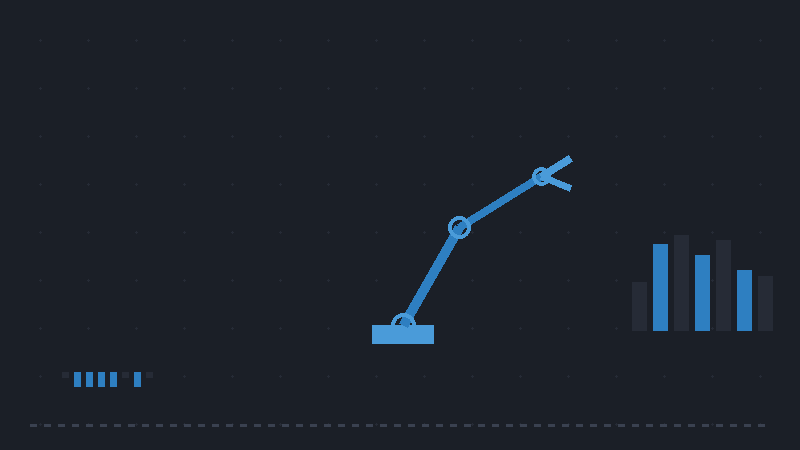
Fulfilment is the part of commerce nobody sees and everybody depends on. Labour is scarce, turnover is brutal, and customer delivery expectations keep compressing, which leaves automation as the only variable operators can actually change.
Historically warehouses were built around people walking to shelves, and automation meant conveyors that were expensive and inflexible. Goods to person systems changed the economics by bringing the shelf to the worker.
The structural driver is labour that cannot be recruited at any reasonable price in the locations where fulfilment centres sit, combined with delivery promises that no longer tolerate a slow pick.
The technology layer spans autonomous mobile robots, goods to person storage and retrieval, robotic piece picking with vision and grasping, sortation systems, and the orchestration software that coordinates humans and machines in the same space.
Adoption economics work on throughput per square foot and per labour hour. Retrofits pay back faster than new builds because the building already exists and the volume is already there.
The beneficiaries include mobile robot manufacturers, storage and retrieval system makers, picking robotics specialists, warehouse execution software vendors, and the integrators who make it all work together.
The value chain runs from equipment through integration to operations. Integrators matter more than they look, because most projects fail on implementation rather than technology.
The overlooked layer includes systems integrators, warehouse execution software firms, robotic gripper and end effector specialists, and the maintenance services that keep fleets running.
Competitive dynamics favour vendors with proven deployments at scale. A warehouse operator will not risk peak season on an unproven system, which makes reference customers decisive.
Risks: capital spending is cyclical and tied to commerce volumes, several high profile automation vendors have failed, retrofits are harder than pilots suggest, and payback periods lengthen when labour costs ease.
What to watch: fulfilment capital spending, robot deployment counts disclosed by operators, integration backlogs, and labour cost trends in logistics hubs.
Coverage / Daily Disruptor issues in this sector

September 2, 2026
Daily Disruptor: $ALOY, The Army’s Rare Earth Tenant
REalloys is days from finalizing a lease to build the only heavy rare earth processing facility on a U.S. military installation, and a January 2027 defense…
Read the issue →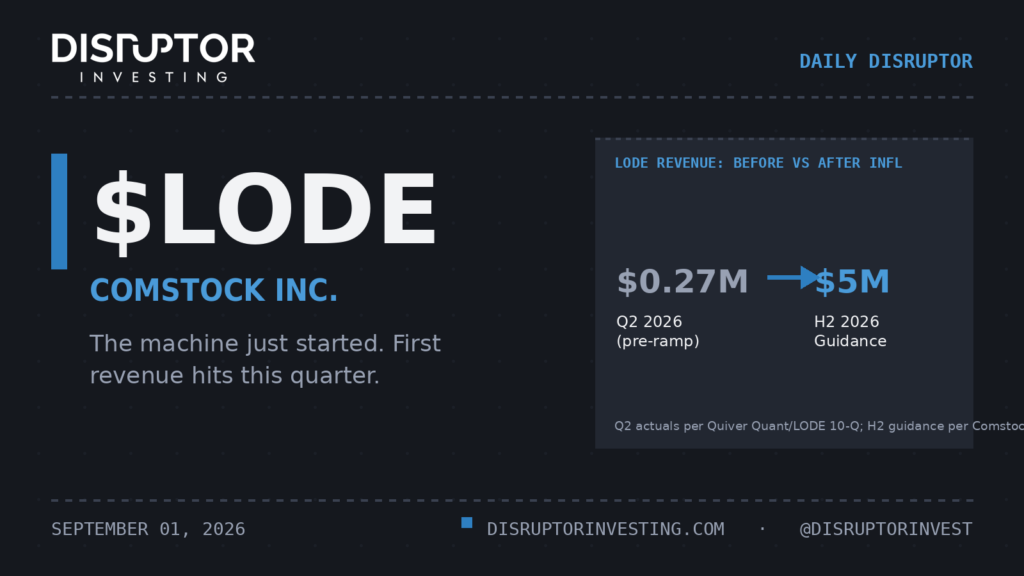
September 1, 2026
Daily Disruptor: $LODE, North America’s First Certified Solar Recycler Turns On
Comstock's industry scale solar panel recycling plant, North America's first certified zero landfill operation of its kind, just completed full system testing and is targeting its…
Read the issue →
August 5, 2026
Daily Disruptor: $FRVO, The Drill Bit Has Already Turned
Fervo Energy reports Q2 results on August 12 and targets first commercial power from Cape Station in Q4 2026, the event that converts a $7.2 billion…
Read the issue →