
← All sectors / The AI transformation
088 · Emissions measurement & environmental data
Counting what gets regulated
Curve position
Binding constraint
Whether disclosure rules survive legal and political challenge in each jurisdiction.
Why this sector sits at Launch Pad
This is real and early. Commercial deployments exist but are small, and we cannot point to a customer at scale with a figure attached.
We place it at Launch Pad because the binding constraint, whether cost, accuracy, or a missing market mechanism, has not eased in a way we can date. The technology improving is not the same as the constraint breaking.
It moves to Liftoff when a specific event changes the economics, and we would expect to be able to name that event and when it happened.
Reviewed on a two month cycle. The position moves only when a dated, verifiable change in the binding constraint justifies it.
Sustainability reporting moved from a marketing document to an audited disclosure in several major jurisdictions. That shift converts a soft category into an accounting problem with assurance requirements, which is a very different market.
Historically emissions reporting was voluntary, self defined, and largely unverified. Companies reported what flattered them. Mandatory frameworks with assurance requirements removed that discretion.
The structural driver is regulation with deadlines, supported by lenders and insurers who price transition risk. Even where rules are contested, large customers impose reporting requirements down their supply chains.
The technology layer spans emissions accounting software, supply chain data collection from thousands of suppliers, continuous monitoring hardware for methane and industrial emissions, satellite and aerial detection, and assurance workflow tools.
Adoption economics are compliance driven and therefore recurring. Once a company reports, it reports every year, and the data infrastructure becomes permanent overhead rather than a project.
The beneficiaries include sustainability reporting software vendors, emissions monitoring hardware makers, satellite and sensing data providers, assurance and audit firms, and the consultancies building programs.
The value chain runs from measurement through accounting and reporting to assurance and disclosure. Assurance is where the accounting firms sit, and it is the piece that makes the data credible.
The overlooked layer includes methane detection hardware firms, environmental testing laboratories, supply chain data collection platforms, and the smaller reporting vendors serving mid market companies.
Competitive dynamics involve the large accounting and assurance firms extending into a category built by software startups, with acquisition the likely resolution for many vendors.
Risks: disclosure rules face legal challenge and political reversal, the category is exposed to shifting policy sentiment, buyers treat it as a compliance cost to minimize, and consolidation is already compressing vendor pricing.
What to watch: disclosure rule implementation dates and legal challenges, assurance requirements taking effect, methane monitoring mandates, and supply chain reporting requirements imposed by large buyers.
Coverage / Daily Disruptor issues in this sector
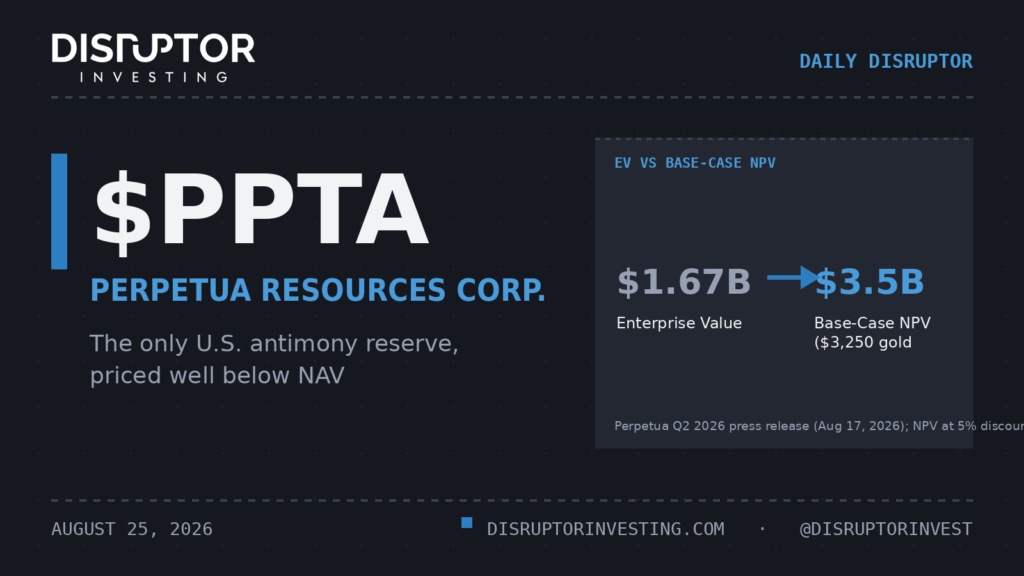
August 25, 2026
Daily Disruptor: $PPTA, America’s Only Antimony Reserve Is Underpriced at $4,000 Gold
Perpetua Resources holds the only identified domestic antimony reserve, just secured a $2.9 billion federal loan, and trades at a deep discount to its own base…
Read the issue →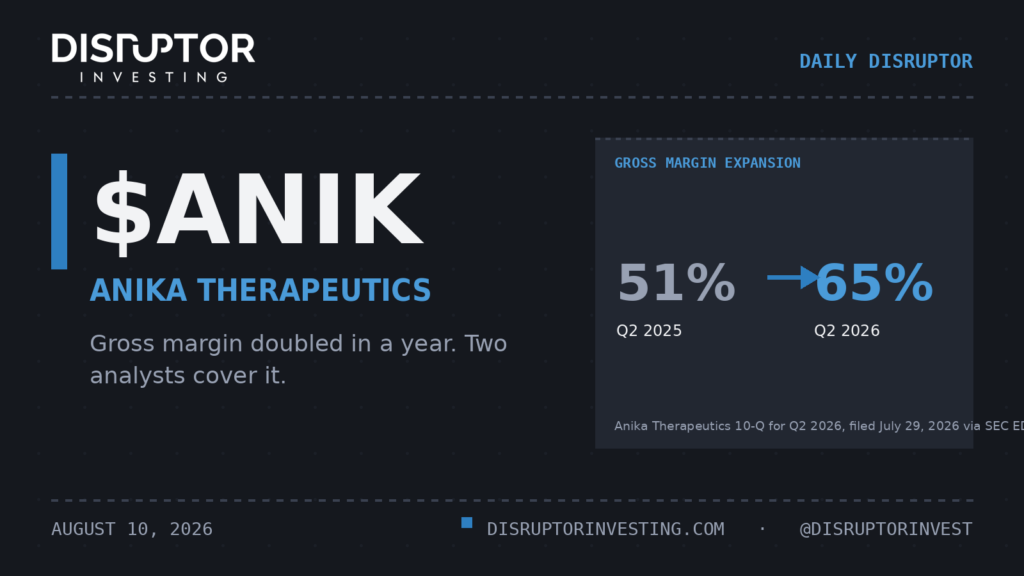
August 10, 2026
Daily Disruptor: $ANIK, a micro cap orthobiologics turnaround the street hasn’t priced
Anika Therapeutics just posted its best adjusted EBITDA quarter since 2020, beat the earnings consensus by more than 1,000%, and nobody noticed.
Read the issue →