
← All sectors / The AI transformation
049 · Edge AI & embedded inference
Intelligence without the round trip
Curve position
Binding constraint
Power budget: how much inference fits inside a few watts.
Not every inference can wait for a data center. Factory vision systems, medical devices, vehicles, and security cameras need answers in milliseconds, without connectivity dependence, and often without sending sensitive data anywhere. Edge inference solves all three at once.
Historical context: embedded computing has always trailed the data center by a generation, constrained by power and thermal limits. Model compression, quantization, and purpose built accelerators have narrowed that gap enough that genuinely useful models now run inside a phone: a camera, or a controller.
The structural driver is economics as much as physics. Cloud inference costs recur forever per query; edge inference is paid once in silicon. At volume, that arithmetic favors the device, which is why every category with high query counts is migrating.
The technology layer spans neural processing units and edge accelerators, model compression and quantization tooling, embedded operating systems and runtimes, memory architectures suited to constrained power, and the deployment tooling that manages models across device fleets.
Adoption economics are strongest where connectivity is unreliable or latency is unacceptable: industrial automation: automotive, medical instruments, defense systems, and retail vision. These buyers pay for silicon content rather than subscriptions.
The beneficiaries include edge accelerator designers, microcontroller and embedded processor makers, memory suppliers benefiting from higher content per device, camera and sensor module makers, and the tooling vendors managing fleet deployment.
The value chain runs from semiconductor IP through chips and modules to devices and fleet management software. Content per device is the metric that matters, since it rises even when unit volumes are flat.
The overlooked layer includes embedded processor and microcontroller specialists, module and camera makers, thermal and power management suppliers for constrained devices, and the industrial computing firms integrating it all.
Competitive dynamics pit established embedded semiconductor incumbents with deep customer relationships against AI native chip startups with better performance per watt. Design wins last for years, so current sockets matter enormously.
Risks: design cycles are long and a lost socket takes years to recover, cloud inference keeps getting cheaper and may prove good enough, embedded markets are fragmented and price sensitive, and semiconductor cycles are brutal.
What to watch: neural processing content in new embedded designs, design win announcements, memory content per device, and inference cost comparisons between edge and cloud in high volume categories.
Coverage / Daily Disruptor issues in this sector
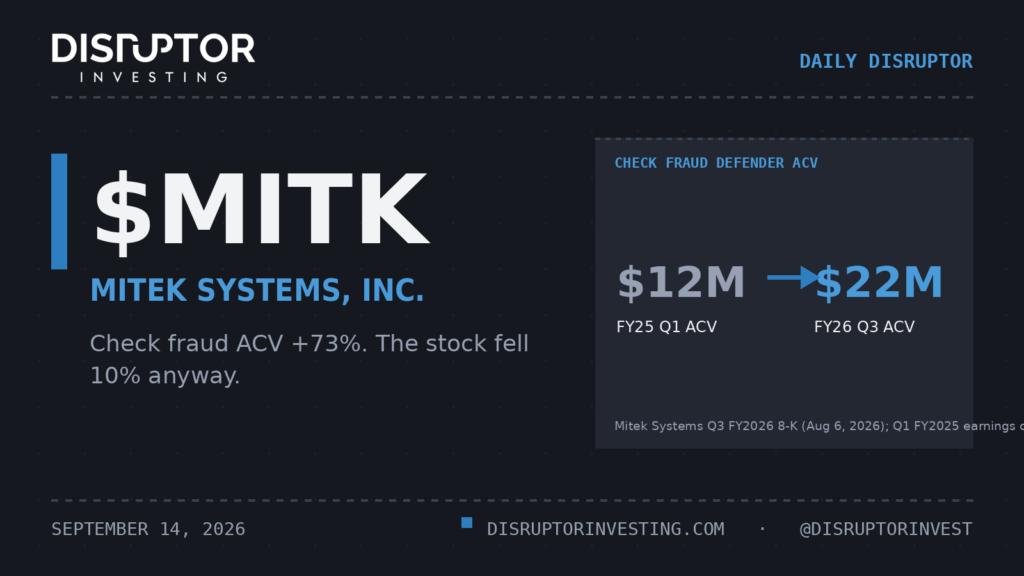
September 14, 2026
Daily Disruptor: $MITK, The Fraud Fighting Network Nobody Is Talking About After Earnings
Mitek's Check Fraud Defender consortium just added Fiserv as a reseller and a top five U.S. bank as a member, covering 70% of U.S. checking accounts,…
Read the issue →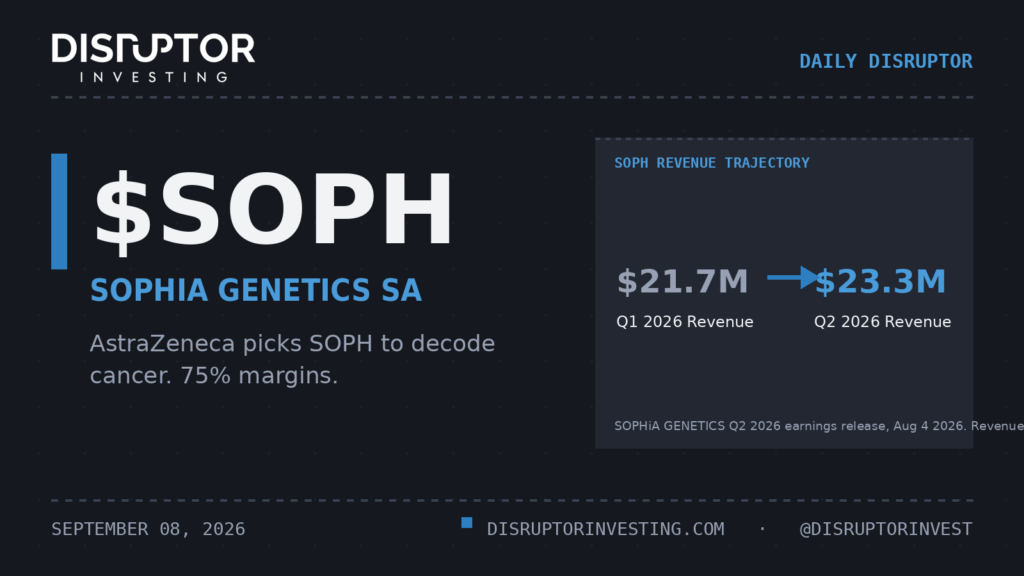
September 8, 2026
Daily Disruptor: $SOPH, The Genomics Platform That Prints 75% Gross Margins and Just Landed AstraZeneca
SOPHiA GENETICS just landed a multi year AstraZeneca companion diagnostic deal, beat Q2 consensus by 7%, and raised full year guidance to 22-24% growth, yet the…
Read the issue →