
← All sectors / The AI transformation
036 · Senior care & long-term services
Care at scale
Curve position
Binding constraint
Reimbursement rates set against a chronic staffing shortage.
Why this sector sits at Liftoff
Labour scarcity in care is severe and structural, which makes automation adoption a necessity rather than a preference. Reimbursement changes gave it dates.
Liftoff: the pressure is acute and the tooling now exists, while penetration remains low.
Reviewed on a two month cycle. The position moves only when a dated, verifiable change in the binding constraint justifies it.

The demographic arithmetic is unambiguous: populations across developed economies are ageing, the cohort needing daily support is growing quickly, and the workforce available to provide it is not. That gap has to be closed with technology, and the pressure is already acute.
Historical context: long term care has been chronically underfunded and understaffed for decades, with quality problems that recurring scandals have made politically salient. That history creates both regulatory scrutiny and unusual willingness to try new approaches.
The structural driver is cost per resident day against a fixed reimbursement backdrop. Operators cannot raise prices freely in publicly funded segments, so margin comes from staffing efficiency and avoided hospitalizations, precisely what monitoring technology targets.
The technology layer spans passive monitoring that detects falls and behavioural changes without cameras in private spaces, medication management systems, workforce scheduling optimized against acuity, remote clinical oversight, and predictive models that flag deterioration before an emergency.
Adoption economics work through avoided events: a prevented fall or hospitalization saves far more than the monitoring costs, and in value based arrangements the operator or payer keeps the savings. Staffing optimization is the second, more immediate lever.
The beneficiaries include senior living and skilled nursing operators with scale, monitoring technology vendors, home care platforms coordinating a distributed workforce, real estate owners of care properties, and the staffing firms supplying clinical labour.
The value chain runs from real estate and operators through clinical services to payers. Home based care is the fastest growing segment because it is cheaper than facilities and preferred by families.
The overlooked layer includes home care technology and scheduling vendors, small cap monitoring device makers, specialty pharmacy serving long term care, and the compliance and quality reporting software the sector's regulation requires.
Competitive dynamics favour operators with occupancy and scale in constrained markets, since new facility supply has been limited for years while the eligible population grows.
Risks: reimbursement policy dominates economics and can change with a budget cycle; staffing costs and agency labour have crushed margins in recent years; regulatory penalties for quality failures are severe; and technology adoption in a low margin sector is capital constrained.
What to watch: occupancy and labour cost trends, reimbursement rule changes, hospitalization rates at technology adopting operators, and home care volume growth relative to facilities. The research treats the demographic curve as the most reliable demand signal in the market.
Coverage / Daily Disruptor issues in this sector
September 9, 2026
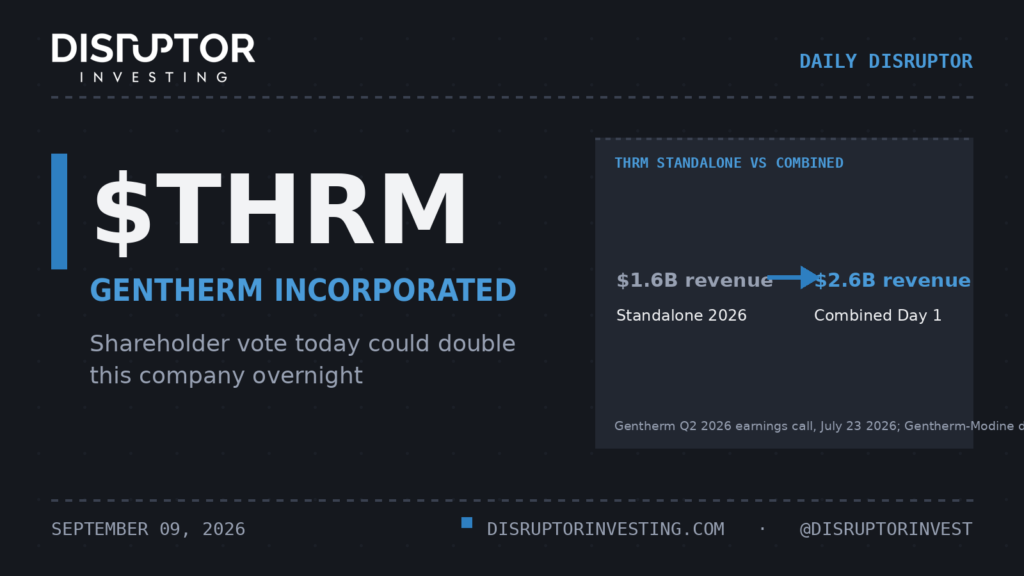
Daily Disruptor: $THRM, The Vote Is Tomorrow and the Street Has Not Caught Up
Gentherm holds a make or break merger vote tomorrow morning, and at roughly eleven times forward earnings the market is pricing it as if the deal…
Read the issue →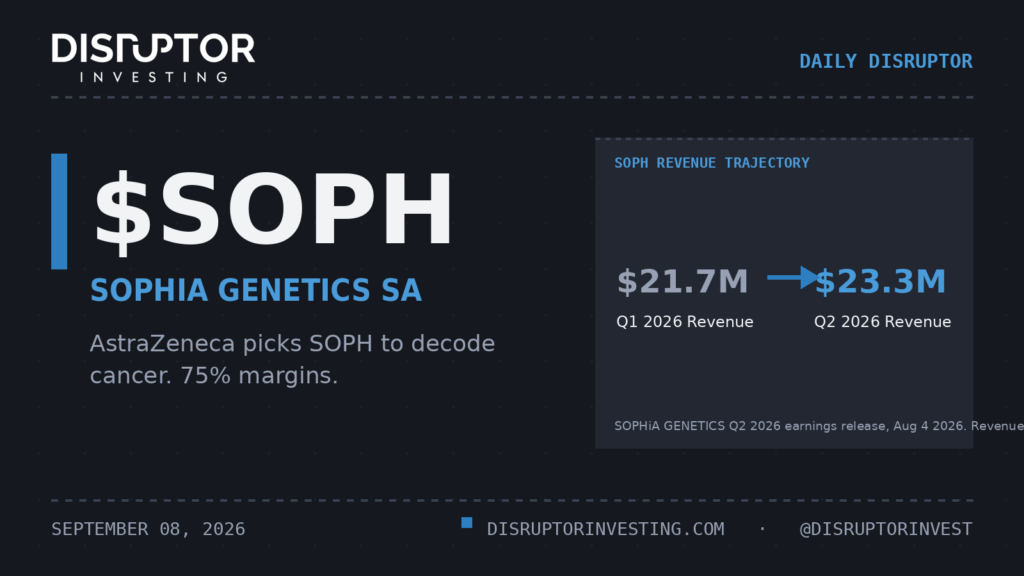
September 8, 2026
Daily Disruptor: $SOPH, The Genomics Platform That Prints 75% Gross Margins and Just Landed AstraZeneca
SOPHiA GENETICS just landed a multi year AstraZeneca companion diagnostic deal, beat Q2 consensus by 7%, and raised full year guidance to 22-24% growth, yet the…
Read the issue →
August 20, 2026
Daily Disruptor: $NNE, the microreactor nobody is paying for
NANO Nuclear just entered formal NRC licensing for its KRONOS microreactor, acquired a profitable nuclear logistics company, and signed a domestic HALEU fuel MOU two days…
Read the issue →