
← All sectors / The AI transformation
167 · Precision fermentation for materials & chemicals
Growing what used to be refined
Curve position
Binding constraint
Cost per kilogram against petrochemical routes that are extremely cheap.

Microbes can be engineered to produce specific molecules that currently come from petroleum. The chemistry works. Whether it works at a price that competes with a petrochemical plant running at enormous scale is an entirely separate question.
Historically industrial biotechnology succeeded in high value, low volume products like enzymes and pharmaceuticals, and failed repeatedly when it attempted commodity chemicals at scale.
The structural driver is customers willing to pay for supply that is not petroleum derived, either because regulation requires it or because their own commitments do, combined with materials that biology can make and chemistry cannot.
The technology layer spans strain engineering, fermentation scale up which is where most failures occur, downstream separation and purification which often costs more than the fermentation, and the continuous processing that improves throughput.
Adoption economics work for specialty molecules first: fragrances, cosmetic ingredients, specialty polymers, and materials with properties petrochemistry cannot easily produce.
The beneficiaries include strain engineering companies, contract fermentation capacity owners, downstream processing specialists, and the consumer brands that reformulate around bio derived inputs.
The value chain runs from strain through fermentation and purification to formulated product. Downstream separation is the underestimated cost and the frequent reason projects fail economically.
The overlooked layer includes downstream processing equipment, separation media suppliers, fermentation contract manufacturers, and the analytical services verifying product purity.
Competitive dynamics favour companies targeting molecules with genuine performance advantages over those attempting to undercut commodity petrochemicals on price.
Risks: scale up failure is the historical norm in this field, petrochemical costs are very low, capital intensity is high, and several well funded companies in this category have restructured or failed.
What to watch: cost per kilogram disclosures at commercial scale, offtake agreements with brands, plant utilisation, and downstream processing cost improvements.
Coverage / Daily Disruptor issues in this sector
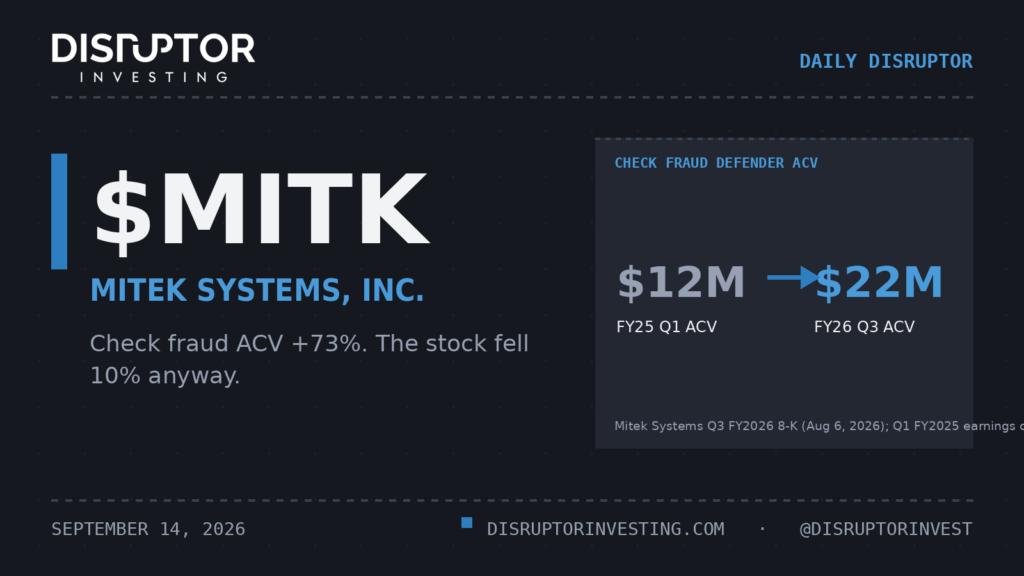
September 14, 2026
Daily Disruptor: $MITK, The Fraud Fighting Network Nobody Is Talking About After Earnings
Mitek's Check Fraud Defender consortium just added Fiserv as a reseller and a top five U.S. bank as a member, covering 70% of U.S. checking accounts,…
Read the issue →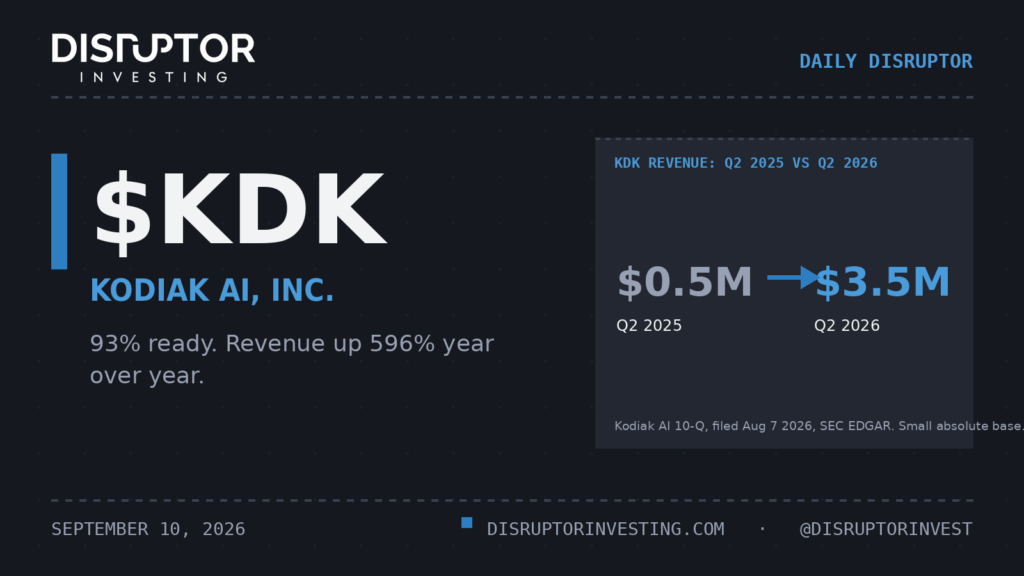
September 10, 2026
Daily Disruptor: $KDK, the driverless long haul launch is ten weeks away
Kodiak AI has 35 driverless semi trucks running commercial freight today, revenue growing at a pace the market has not priced, and a year end highway…
Read the issue →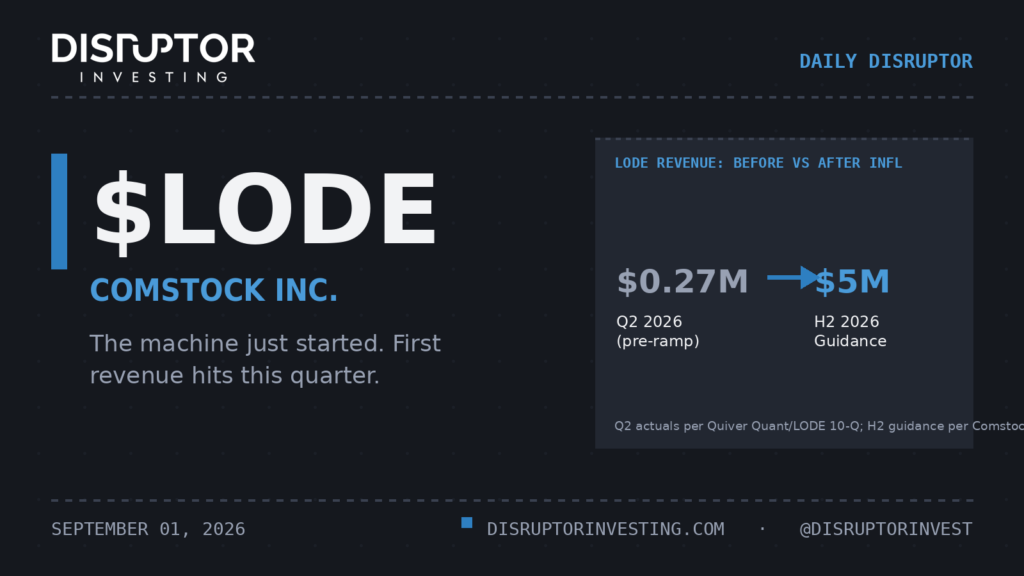
September 1, 2026
Daily Disruptor: $LODE, North America’s First Certified Solar Recycler Turns On
Comstock's industry scale solar panel recycling plant, North America's first certified zero landfill operation of its kind, just completed full system testing and is targeting its…
Read the issue →