
← All sectors / The AI transformation
146 · Prediction markets & event contracts
Prices as a forecast
Curve position
Binding constraint
Regulatory acceptance of contracts on politics and other contested categories.

A market price aggregates information better than most surveys, which is why prediction markets have interested economists for decades. What changed recently is that regulated exchanges obtained licences and volumes became large enough to matter.
Historically these markets operated offshore, at small scale, or under academic exemption, which limited both liquidity and credibility. Licensed venues changed the participant base.
The structural driver is demand for forecasts on things that lack a market: elections, regulatory decisions, weather events, corporate milestones. Where an outcome is financially consequential, someone wants to hedge or express a view on it.
The technology layer spans exchange matching and clearing, contract design and settlement criteria, market making and liquidity provision, oracle and resolution processes that determine outcomes, and the surveillance regulators require.
Adoption economics depend on liquidity, which is self reinforcing. Thin markets produce unreliable prices, which deters participants, which keeps markets thin.
The beneficiaries include licensed exchange operators, market makers, data providers selling the resulting probability series, and the brokers offering access.
The value chain runs from contract design through exchange and market making to settlement. Settlement criteria are the fragile part, since disputed resolution destroys trust quickly.
The overlooked layer includes market making firms, settlement and oracle providers, data redistribution businesses, and the compliance vendors serving licensed venues.
Competitive dynamics favour whoever achieves liquidity first in a given contract category, since traders go where the volume is and that advantage compounds.
Risks: regulatory posture on political contracts is contested and has swung both ways, liquidity is fragile outside headline events, settlement disputes damage credibility, and the category attracts gambling regulation in some jurisdictions.
What to watch: regulatory rulings on contract categories, notional volumes by market, institutional participation, and settlement disputes.
Coverage / Daily Disruptor issues in this sector
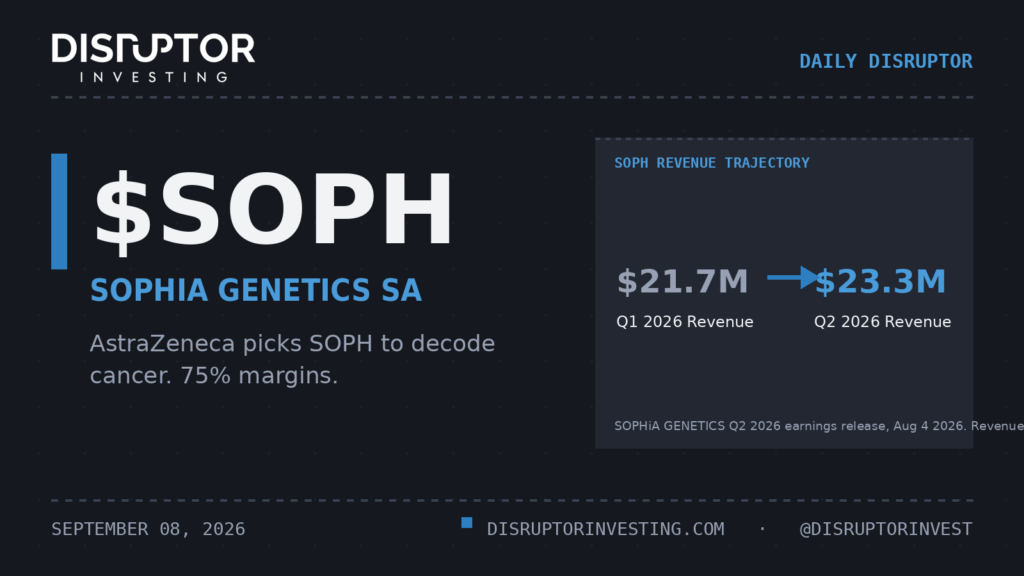
September 8, 2026
Daily Disruptor: $SOPH, The Genomics Platform That Prints 75% Gross Margins and Just Landed AstraZeneca
SOPHiA GENETICS just landed a multi year AstraZeneca companion diagnostic deal, beat Q2 consensus by 7%, and raised full year guidance to 22-24% growth, yet the…
Read the issue →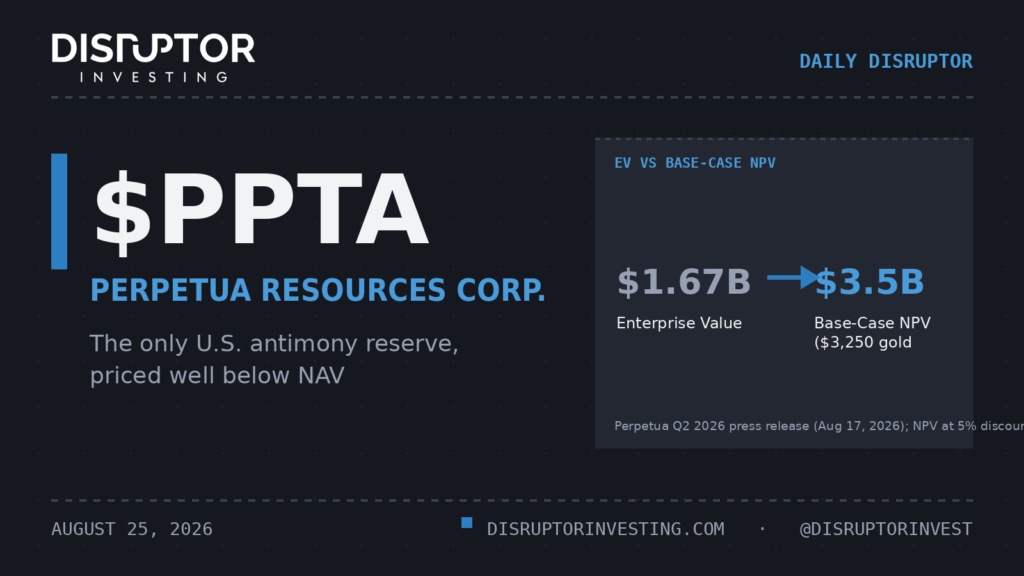
August 25, 2026
Daily Disruptor: $PPTA, America’s Only Antimony Reserve Is Underpriced at $4,000 Gold
Perpetua Resources holds the only identified domestic antimony reserve, just secured a $2.9 billion federal loan, and trades at a deep discount to its own base…
Read the issue →
August 14, 2026
Daily Disruptor: $ASPI, Three Revenue Lines, One Morning
ASP Isotopes reports second quarter 2026 results this morning, and a shareholder letter from nine days ago already told the setup: PET Labs up more than…
Read the issue →