
← All sectors / The AI transformation
132 · Industrial robotics retrofit & cobots
Automating the factory that already exists
Curve position
Binding constraint
Integration cost, which routinely exceeds the robot itself.
Why this sector sits at Launch Pad
The technology works and deployments exist, but the constraint is capital cycle and replacement rate, which move slowly and have not been reset by anything dated.
Launch Pad is the honest position. Operators upgrade on their own schedules, and no policy change or cost threshold has compressed that schedule.
It moves to Liftoff if a mandate, an incentive with a deadline, or a step change in payback period appears.
Reviewed on a two month cycle. The position moves only when a dated, verifiable change in the binding constraint justifies it.
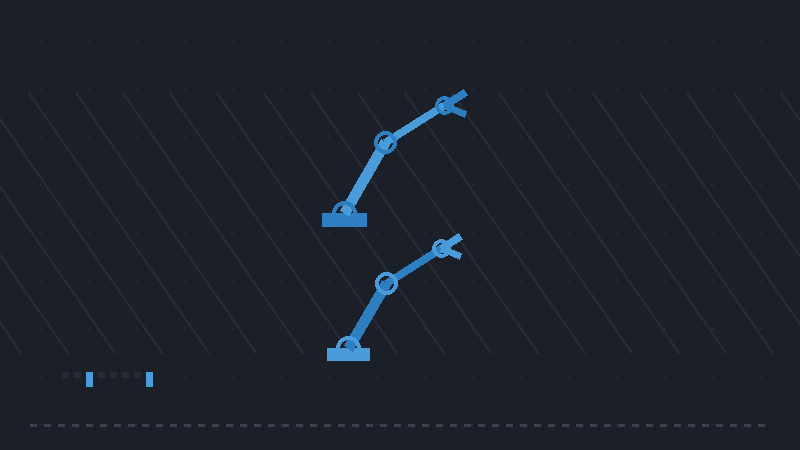
Greenfield automated factories make good photographs. The far larger opportunity is the enormous installed base of plants that will never be rebuilt and need automation added to lines designed decades ago around people.
Historically industrial robots required safety cages, fixed programming, and integration budgets that only large manufacturers could justify. Collaborative robots and better sensing changed which plants could realistically adopt.
The structural driver is labour scarcity in manufacturing regions where plants cannot be moved, combined with reshoring that creates production capacity in high wage geographies where automation is the only viable economics.
The technology layer spans collaborative robots that work alongside people, machine tending and palletising cells, vision guided picking, no code programming that lets a technician rather than an engineer deploy, and the safety systems that certify shared workspaces.
Adoption economics live or die on integration cost. The robot is often the smaller share of a project, and anything that reduces deployment time changes which applications are viable.
The beneficiaries include collaborative robot manufacturers, gripper and end effector specialists, machine vision suppliers, integrators serving mid sized manufacturers, and the robot as a service providers removing capital barriers.
The value chain runs from robot through integration to production. Integration is the bottleneck, which is why simplified deployment matters more than robot specifications.
The overlooked layer includes end effector and gripper makers, machine vision suppliers, safety certification services, and the financing firms offering robots on subscription.
Competitive dynamics increasingly favour whoever makes deployment simplest rather than whoever builds the best arm, since hardware has largely commoditised.
Risks: manufacturing capital spending is cyclical, integration remains harder than vendors claim, low cost robot competition compresses margins, and skilled integrators are themselves scarce.
What to watch: robot shipment volumes by region, integration project timelines, robot as a service adoption, and manufacturing capital spending indices.