
← All sectors / The AI transformation
080 · Content provenance & synthetic media detection
Proving what is real
Curve position
Binding constraint
Standards adoption across capture devices and platforms, which no single company controls.
Why this sector sits at Liftoff
Provenance requirements attached to synthetic media created a market where there was previously only research. Platform and regulatory deadlines put dates on it.
Liftoff rather than Launch Pad because the demand trigger has fired, but revenue is early and fragmented.
Reviewed on a two month cycle. The position moves only when a dated, verifiable change in the binding constraint justifies it.

When any image, voice, or video can be generated convincingly, the question shifts from whether something looks real to whether its origin can be proved. Provenance infrastructure attaches verifiable history to content at the point of capture.
Historically media authenticity relied on the difficulty of faking it. That assumption held for a century and collapsed in about three years, leaving courts, newsrooms, insurers, and banks without a reliable test.
The structural driver is liability landing on institutions that act on media. An insurer paying a claim on a generated photograph, a bank approving a transfer after a cloned voice call, or a court admitting fabricated evidence all create demand for verification.
The technology layer spans cryptographic signing at capture in cameras and phones, content credentials that travel with a file, watermarking, detection models that identify generated media, and the verification services that check all of it.
Adoption economics are loss driven in finance and insurance, and reputational in media. Both are real budgets, but the market only works if capture devices and platforms adopt common standards.
The beneficiaries include provenance standard implementers, camera and sensor manufacturers adding signing, detection vendors serving insurers and banks, and the digital forensics services firms handling disputes.
The value chain runs from capture hardware through standards and metadata to platform display and verification services. Capture is the hard part, because unsigned content will always exist.
The overlooked layer includes digital forensics firms, insurance claims verification specialists, camera module and sensor makers implementing signing, and the small cap detection vendors serving specific verticals.
Competitive dynamics depend on collective adoption rather than individual product quality, which makes standards participation more important than features and slows the whole category.
Risks: detection is an arms race that defenders can lose, standards may fragment, unsigned content remains the default for years, and regulation could either create the market or fail to arrive.
What to watch: content credential adoption in shipping cameras and phones, platform display of provenance data, insurance and banking verification deployments, and regulation requiring disclosure of synthetic media.
Coverage / Daily Disruptor issues in this sector
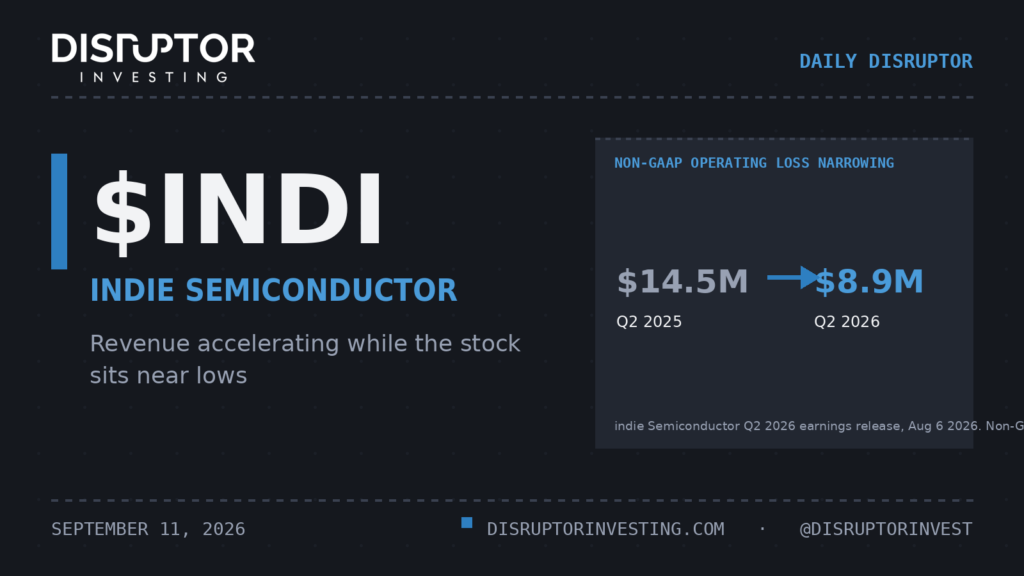
September 11, 2026
Daily Disruptor: $INDI, the ADAS chip maker growing 30% that nobody’s talking about
indie Semiconductor just guided for 30% year over year growth in Q3 while its stock still trades 44% below its 52-week high, a gap that looks…
Read the issue →
August 12, 2026
Daily Disruptor: $AMRC, the energy infrastructure company data centers just discovered
Ameresco just reported a record $1.8 billion quarter of new project awards, two thirds of it from data center customers who can't wait for grid connections.
Read the issue →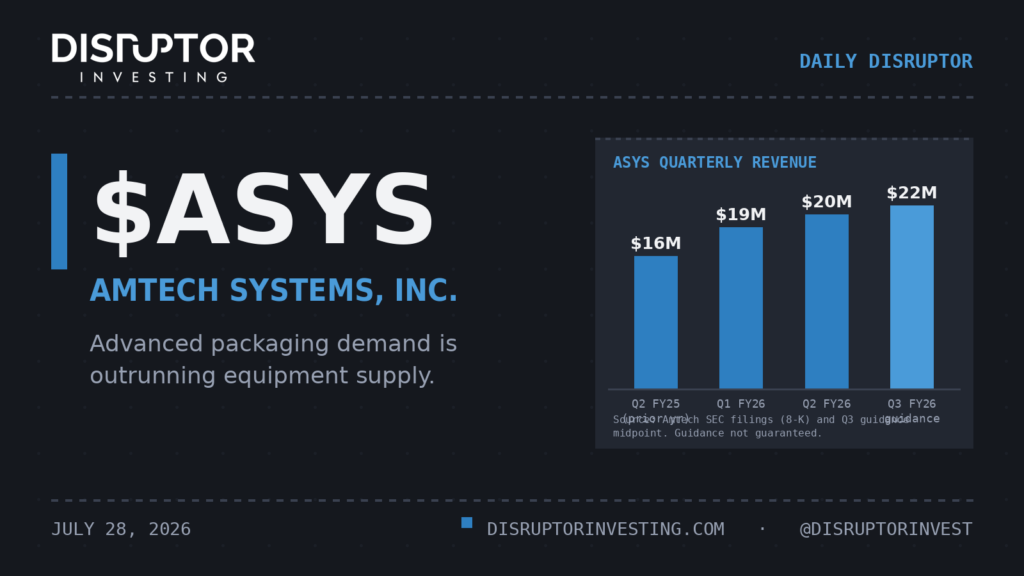
July 28, 2026
Daily Disruptor: $ASYS, The Tiny Furnace Maker Riding the AI Packaging Wave
Amtech Systems is a micro cap that makes thermal processing equipment for AI semiconductor packaging, and it has two hard dated catalysts in the next five…
Read the issue →