
← All sectors / The AI transformation
156 · Circular electronics & IT asset disposition
The second life of the server
Curve position
Binding constraint
Data security assurance, which is the reason most equipment gets destroyed instead.
Why this sector sits at Launch Pad
The technology works and deployments exist, but the constraint is capital cycle and replacement rate, which move slowly and have not been reset by anything dated.
Launch Pad is the honest position. Operators upgrade on their own schedules, and no policy change or cost threshold has compressed that schedule.
It moves to Liftoff if a mandate, an incentive with a deadline, or a step change in payback period appears.
Reviewed on a two month cycle. The position moves only when a dated, verifiable change in the binding constraint justifies it.

Data centre hardware retires on a cycle measured in a few years, and most of it still works. The barrier to reuse is not technical, it is that owners would rather destroy a drive than risk a data breach, so enormous value gets shredded.
Historically disposal meant destruction and scrap recovery. Rising equipment prices, supply constraints, and reporting requirements on electronic waste changed the economics of doing better.
The structural driver is equipment cost plus regulation. Accelerator scarcity made used hardware genuinely valuable, and reporting requirements made disposal a documented process rather than an afterthought.
The technology layer spans certified data sanitisation, testing and grading of used equipment, component level repair and harvesting, resale marketplaces, and the chain of custody documentation auditors require.
Adoption economics work through recovery value net of processing cost. When accelerators and memory hold value, recovery becomes materially profitable rather than merely responsible.
The beneficiaries include IT asset disposition firms, refurbished equipment marketplaces, component harvesting specialists, and the data centre operators recovering value from retirement cycles.
The value chain runs from retirement through sanitisation and grading to resale or recycling. Certified sanitisation is the trust layer that makes everything downstream possible.
The overlooked layer includes data sanitisation software and certification bodies, component testing equipment, logistics providers moving retired hardware securely, and the precious metal recovery businesses at the end.
Competitive dynamics favour firms with certifications and enterprise trust, since a single data incident would end a provider's business immediately.
Risks: equipment values are volatile and can collapse, data security incidents are existential, regulation varies by jurisdiction, and large operators may bring the function in house.
What to watch: used equipment pricing, retirement volumes from large operators, certification standards, and in house versus outsourced disposition decisions.
Coverage / Daily Disruptor issues in this sector
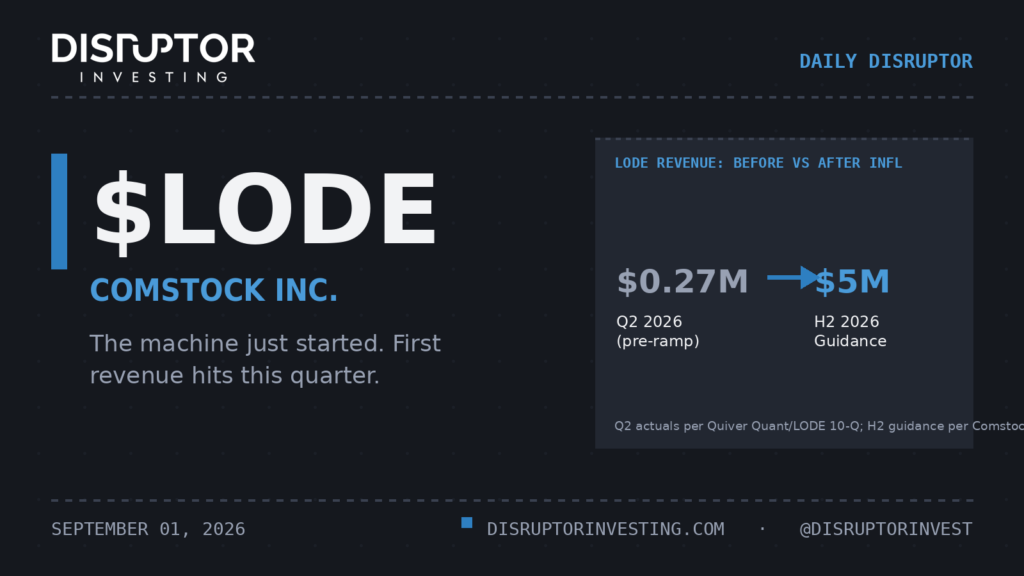
September 1, 2026
Daily Disruptor: $LODE, North America’s First Certified Solar Recycler Turns On
Comstock's industry scale solar panel recycling plant, North America's first certified zero landfill operation of its kind, just completed full system testing and is targeting its…
Read the issue →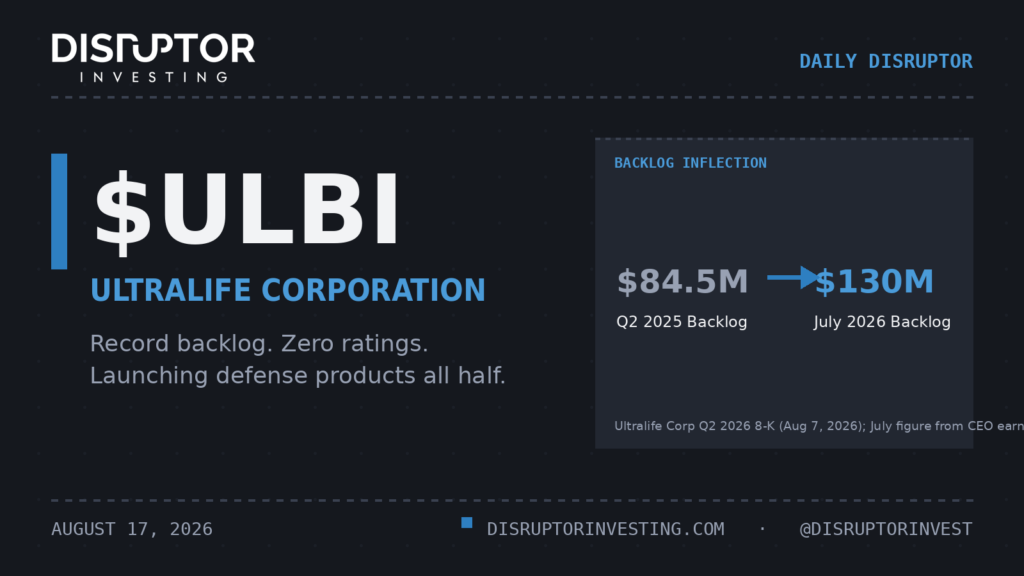
August 17, 2026
Daily Disruptor: $ULBI, The Defense Battery With a $130M Backlog and Nobody Watching
Ultralife just reported its highest backlog in company history, a 500-basis point gross margin expansion, and a 39% jump in its higher margin communications segment, yet…
Read the issue →