
← All sectors / The AI transformation
014 · Insurance
Pricing risk with machines
Curve position
Binding constraint
State rate approval and constraints on data usage.
Why this sector sits at Launch Pad
Adoption here is rising steadily rather than inflecting. The binding constraint is trust and workflow integration, and neither has been broken by a specific event. Buyers are running pilots and expanding them at their own pace.
We place this at Launch Pad because nothing dated has changed. There is no regulation with a compliance deadline, no certification, no cost threshold crossed. Gradual improvement is not an inflection, and calling it one would make the position meaningless.
It moves to Liftoff when we can name the event that changed the rate of adoption, not merely observe that adoption grew.
Reviewed on a two month cycle. The position moves only when a dated, verifiable change in the binding constraint justifies it.

Insurance is a prediction business, and AI is the best prediction technology ever built. Underwriting models ingest data no actuary could process, satellite imagery for property, telematics for driving, clinical signals for life and health, and price risk at individual resolution, in an industry where selection is the whole game.
Historical context: insurance has always advanced with data, mortality tables built life insurance, credit scores rebuilt auto pricing. Each data leap advantaged early adopters for years before spreading. AI is the largest such leap, arriving amid the hardest property market in decades.
The structural driver is climate volatility meeting legacy pricing: carriers that model wildfire, flood, and storm risk accurately stay solvent and selectively write business competitors flee; those that can't retreat from entire states. Catastrophe modeling has moved from actuarial afterthought to strategic core.
Claims is the visible revolution: photo based damage estimation, straight through processing for simple claims, and fraud models that catch organized schemes across carriers. Faster claims cut loss adjustment expense while improving customer satisfaction, the industry's rare double win, and free adjusters for the complex work that remains.
Distribution is quietly consolidating around data: brokers with analytics leverage win share and roll up smaller books, while embedded insurance, coverage priced and sold inside other transactions, grows on AI's ability to quote instantly from thin information.
Insurtech's second generation is healthier than its first, pairing underwriting discipline with AI native cost structures, while legacy carriers hold an underappreciated moat: decades of proprietary claims data, if they can organize and deploy it before challengers accumulate their own.
The value chain runs from distribution (agents, brokers, embedded channels) through carriers and their underwriting/claims machinery to reinsurance and capital markets. AI is being injected at every link, but pricing and claims, where loss ratios live, is where advantage compounds.
The overlooked layer includes specialty and excess lines carriers pricing risks admitted markets abandon, claims technology and catastrophe analytics vendors selling to every carrier, reinsurers arbitraging modeling advantage, and the brokers compounding through consolidation.
Competitive dynamics favor data depth over data breadth: a carrier's own claims history: properly modeled, beats purchased datasets. That advantages scaled incumbents who modernize and the focused specialists in niche lines, while squeezing mid sized generalists caught between.
Risks: catastrophe losses can overwhelm modeling advantage in any single year; regulators constrain both pricing freedom and data usage; AI priced risk pools can unravel adversely if competitors select against you; and soft market pricing cycles compress margins regardless of technology.
What to watch: loss ratio divergence between modeling leaders and laggards, state level regulatory decisions on AI underwriting, catastrophe bond pricing, claims cycle time disclosure, and broker organic growth rates. The research covers who converts prediction advantage into underwriting profit.
Coverage / Daily Disruptor issues in this sector

August 3, 2026
Daily Disruptor: $ALM, The Western Tungsten Mine the Market Is Underpricing
Almonty's Sangdong mine began shipping tungsten concentrate in July, and Q2 earnings due mid August will be the first report to reflect it.
Read the issue →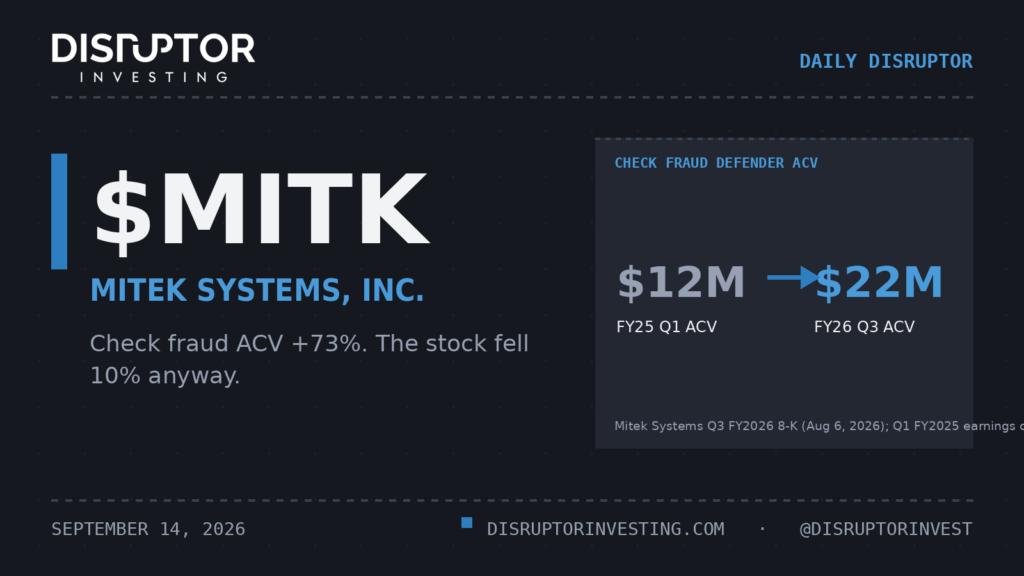
September 14, 2026
Daily Disruptor: $MITK, The Fraud Fighting Network Nobody Is Talking About After Earnings
Mitek's Check Fraud Defender consortium just added Fiserv as a reseller and a top five U.S. bank as a member, covering 70% of U.S. checking accounts,…
Read the issue →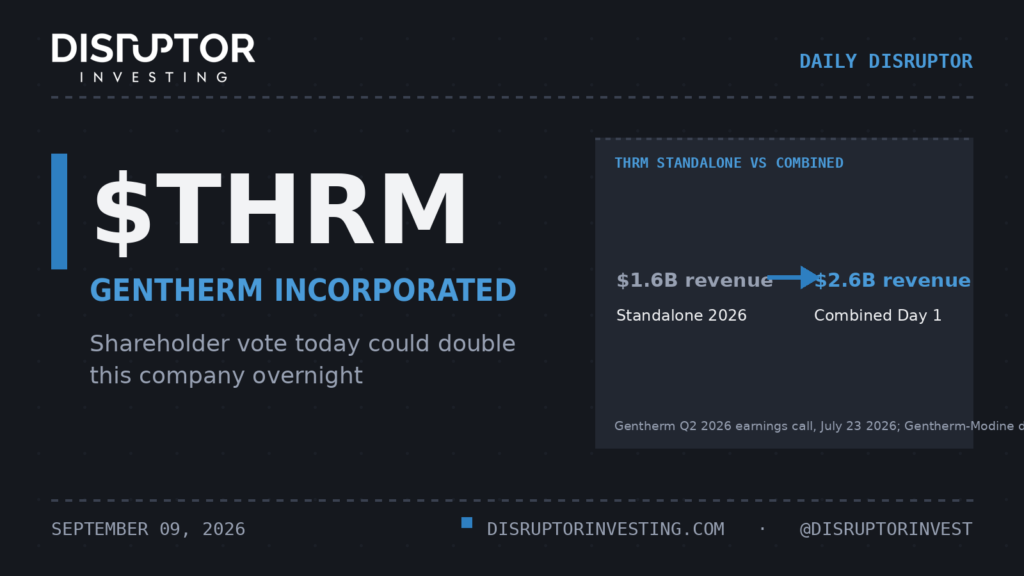
September 9, 2026
Daily Disruptor: $THRM, The Vote Is Tomorrow and the Street Has Not Caught Up
Gentherm holds a make or break merger vote tomorrow morning, and at roughly eleven times forward earnings the market is pricing it as if the deal…
Read the issue →