
← All sectors / The AI transformation
119 · Alternative data & investment research infrastructure
Knowing before the filing
Curve position
Binding constraint
Compliance review, which decides whether a dataset can be used at all.
Institutional investors buy datasets that did not exist a decade ago: satellite imagery of parking lots, aggregated card spending, app download panels, shipping manifests, job postings. What was an edge is becoming table stakes, which changes where the advantage sits.
Historically research meant filings, sell side notes, and management meetings. Alternative data added a stream of higher frequency observation that sometimes anticipates the filing.
The structural driver is competition. When enough funds buy the same dataset, the edge decays, which pushes demand toward newer, more specific, and better processed data rather than toward more of the same.
The technology layer spans data collection including satellites and sensors, entity resolution linking data to tradeable securities, panel construction and bias correction, compliance screening for material non public information, and the platforms that deliver it into research workflows.
Adoption economics work when a dataset changes a position. Funds measure this ruthlessly and cancel datasets that do not demonstrate value, which makes retention the metric that matters.
The beneficiaries include data providers with proprietary collection, aggregation platforms, entity resolution specialists, satellite operators, and the compliance vendors screening datasets before use.
The value chain runs from collection through processing and compliance to the investment process. Proprietary collection is the only durable moat, since processed data can be replicated.
The overlooked layer includes compliance screening services, entity mapping vendors, data marketplace operators, and the specialist processors turning raw imagery into counts.
Competitive dynamics reward exclusivity and novelty. A dataset everyone has is worth little, so providers face constant pressure to find new sources.
Risks: edge decays as datasets become widely held, privacy regulation restricts collection, compliance concerns can block adoption entirely, and fund budgets are cyclical with performance.
What to watch: dataset retention rates at providers, privacy regulation affecting collection, new collection modalities reaching commercial scale, and hedge fund research budgets.
Coverage / Daily Disruptor issues in this sector
September 9, 2026
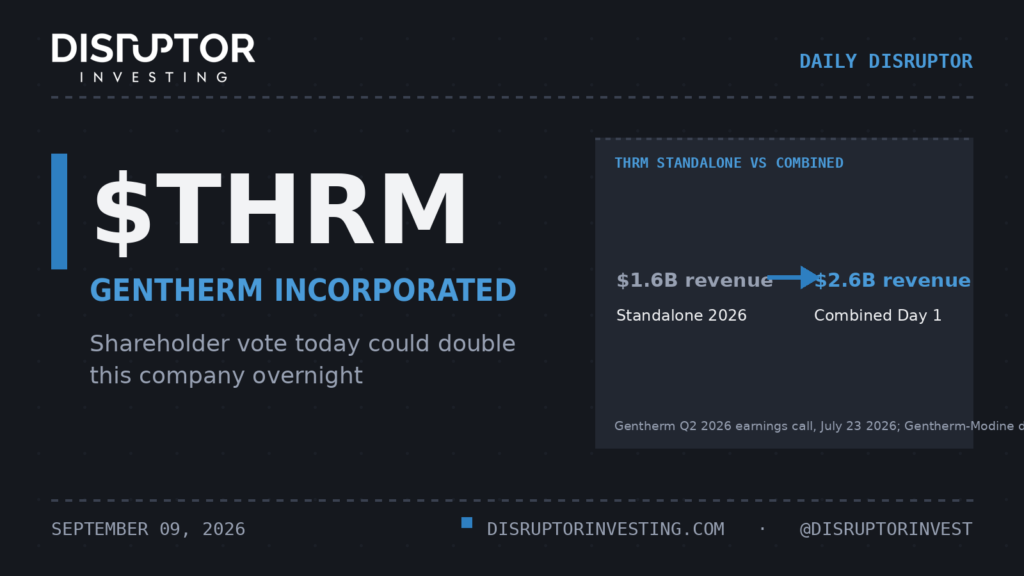
Daily Disruptor: $THRM, The Vote Is Tomorrow and the Street Has Not Caught Up
Gentherm holds a make or break merger vote tomorrow morning, and at roughly eleven times forward earnings the market is pricing it as if the deal…
Read the issue →
August 12, 2026
Daily Disruptor: $AMRC, the energy infrastructure company data centers just discovered
Ameresco just reported a record $1.8 billion quarter of new project awards, two thirds of it from data center customers who can't wait for grid connections.
Read the issue →